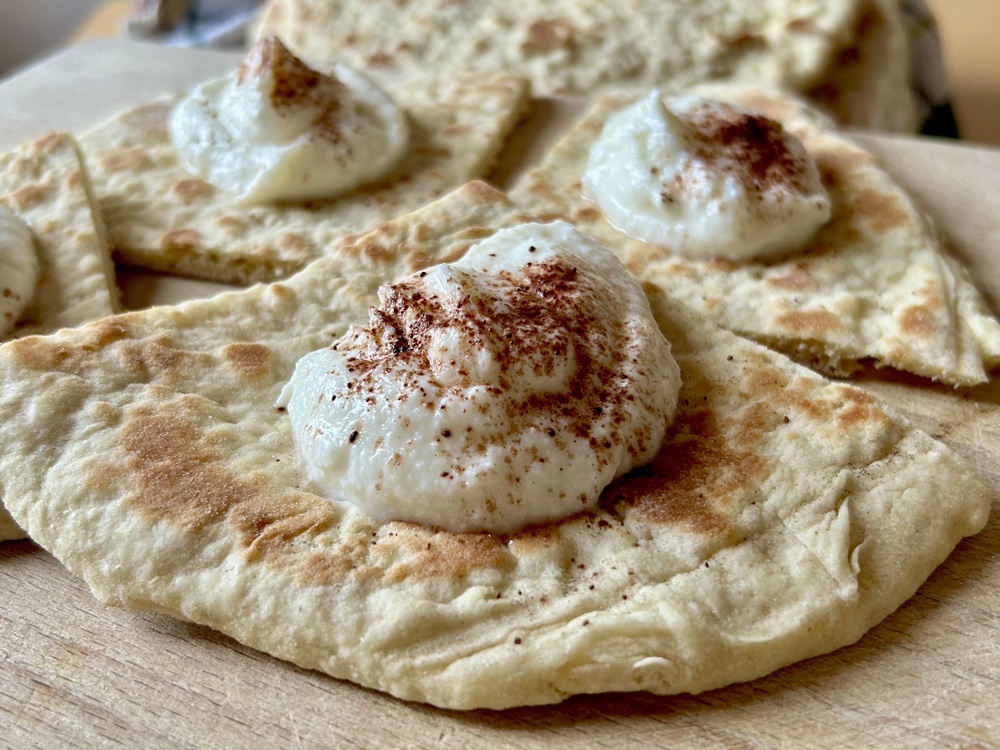
Sweet piadina is a happy childhood memory.
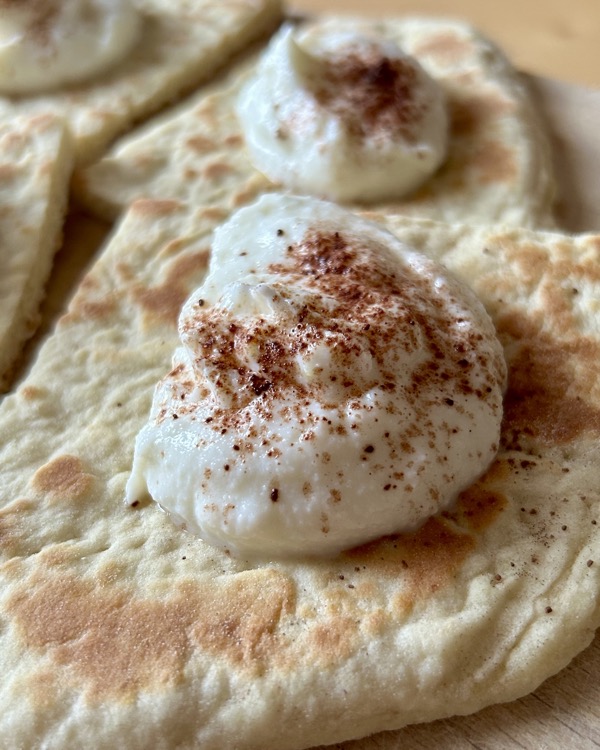
In my childhood home, it was mainly made during the cold months and, rather than a snack, it was a simple Sunday evening treat, often accompanied by traditional piadina, baked potatoes, and mixed grilled meats. And sweet piadina with ricotta cream and a sprinkling of bitter cocoa to end the dinner beautifully.
The dough used to make sweet piadina is typical of western Romagna, where the addition of a bit of yeast, or baking soda, as grandma used to do, creates a soft, small piadina compared to the large, thin piadina that characterizes the Riccione area.
In the Imola area, it is traditional to use milk instead of water, which makes the dough softer and perhaps even tastier.
The recipe I am sharing is my family’s, following the ancient tradition of sweet piadina. In addition to the traditional ingredients, flour, milk, a pinch of salt, baking soda, and a little lard (or olive oil; I indicate both quantities in the recipe), eggs and sugar must also be added to the sweet dough (although, for me, the eggs are optional). If you like, you can add the aroma of grated lemon zest.
Kitchen Notes
- Lard or olive oil? Lard makes the piadina more fragrant without making it heavy, since the amount used is small. That said, olive oil is also fine, which I use myself when I don’t have lard.
- Granulated sugar or cane? My grandmother used to use caster sugar. Over time, I have replaced it with cane sugar.
- Why did you write that eggs are optional? Eggs add color and flakiness to the dough. However, you can omit the egg and add a small amount of milk (or extra water).
Sweet piadina, merenda or dessert
In my childhood home, sweet piadina was a dessert, but those were different times. Today, you can also eat it for breakfast or as a snack, accompanied by jam or fresh fruit.
If you want to serve it as a dessert at the end of a meal, use a cream of your choice: chocolate, mascarpone, or ricotta. Even chestnut jam.
My grandmother always made ricotta cream, which everyone loved, but it was also quick to make.
All you need is ricotta and a little powdered sugar, which you mix together until you have a soft cream. No cooking required; refrigerate if you prepare it in advance. If you like, you can also add the aroma of grated lemon zest.
A dish from the cucina povera of Romagna?
The Romagna poet Giovanni Pascoli is credited with coining the term by Italianizing some names commonly used in the Romagna dialect (for example, piê or pìda).
He also celebrated, like few others, the goodness of what he called the bread of the Romagna people.
Although, to be fair, the piadina prepared for him by his beloved sister was not the poor-quality food that most Romagna people knew and ate at the beginning of the 20th century. In addition, piadina was not widespread throughout Romagna like it is today.
Today, it is a PGI product that characterizes the entire Romagna region, even though the versions from Ravenna and Forlì differ from that from Rimini (you can find both recipes on the blog). Piadina calls for rich, generous fillings and satisfies hunger and lifts spirits.
But the history of piadina tells above all the story of a bread of poor cuisine, sometimes very poor, as I have already recounted here on the blog and in my newsletter Food Notes from Bologna, a letter filled with history, memories, and recipes.
However, there was also a richer and often sweeter version. The version intended for the tables of the wealthy. Then the bourgeoisie, to which Pascoli also belonged, was prepared with lard, milk, eggs, honey, or sugar.
What was once a dessert for the few is now so simple that it is still for the few. Above all, for the few who remember it.
I leave you with two recipes: one for sweet piadina and one for ricotta cream (the second is below the template for the first).
Buona cucina, Monica
Piadina of Romagna
Keep in Touch
- To receive unpublished recipes, tips, and food stories, sign up for the Tortellini&CO newsletter.
- Follow me on Instagram.
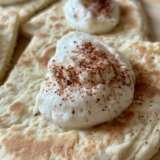
Sweet piadina of Romagna
Ingredients
- 200 ml of milk
- 500 g of flour, for me half 00 and half spelt
- 175 g of cane or granulated sugar
- 3 g of baking soda or 2 g baking powder for cakes
- 1 egg, about 60-70 g
- 40 g of lard or 20 g olive oil
- grated lemon zest for flavor, just a little
Instructions
- Warm the milk on the stove and set it aside.
- You can knead by hand or in a stand mixer. I'll leave you with the first method; if you use a stand mixer, follow the instructions for adding the ingredients.
- In a large bowl, mix the flour, sugar, baking soda, or baking powder.
- Make a well in the center and pour in the egg, lard, or olive oil. Pour in half the milk and mix with a fork until large crumbs form. If using a stand mixer, turn it on to speed 1 (dough hook) while pouring in the remaining milk a little at a time.
- Add the salt, distributing it over the dough in the bowl, and the lemon zest.
- Now add the rest of the milk a little at a time, if needed. If the dough seems too sticky, stop; you will have to correct it by adding more flour (if, on the other hand, it seems too hard, add a tablespoon of milk or water at a time until it becomes soft).
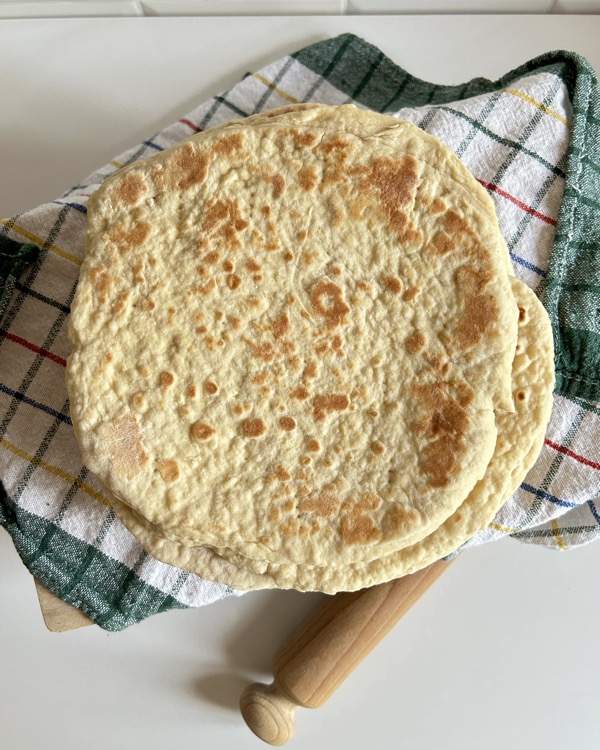
- Transfer the dough to a clean surface and finish kneading with your hands as if it were dough for fresh pasta. Form a soft, but not sticky, ball, then divide it into 4 pieces for 4 large piadinas or 6 for smaller piadinas. Cover with a cloth and leave to rest at room temperature for 30 minutes. Piadina does not rise; it rests.
- Dust the pastry board with flour and roll out each ball of dough with a rolling pin into a thin circle, a few millimeters thick.
- Prick the surface with the prongs of a fork and cook each piadina on a hot griddle for a few minutes on each side. When colored spots form on the surface, turn the piadina over and cook for a few minutes or until a speckled effect forms.
- Cut the piadinas into wedges and spread the ricotta cream on each piece.
Tip
- You can cook the piadine and, once cooled, store them in the freezer for up to a month.
Ricotta cream (no cooking)
Ingredients
- 250 g of cow's milk ricotta
- 50 g of powdered sugar
- grated lemon zest for flavor
- unsweetened cocoa for dusting
Instructions
- Combine the ingredients in a bowl and beat with a whisk until the mixture is fluffy.
- Refrigerate until ready to serve.