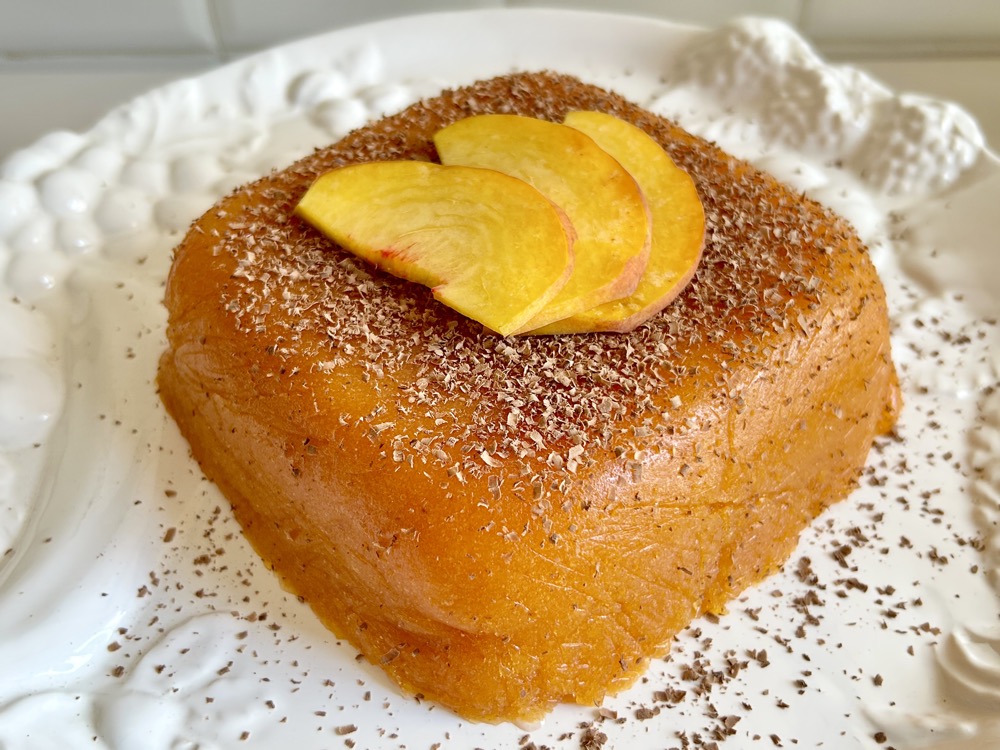
Peach pudding has a nostalgic flavor, a soft texture, and is easy to make. All you need is water, fruit, sugar, and a thickener (agar-agar or gelatin sheets). It’s a simple dessert that a scoop of ice cream or a spoonful of whipped cream can make shine like a dancing star.
I can’t even tell you how many fruit puddings and jellies I ate during my childhood.
Once upon a time
Summers long ago were full of scents, flavors, and colors.
Today, many things have changed.
Desserts like fruit puddings haven’t stood the test of time. In the soft light of a hot afternoon spent leafing through the pages of family cookbooks, I rediscovered the forgotten flavor of peach pudding, my favorites, perpetually overshadowed by those made with apricots and plums.
The overripe fruit, the slightly bruised kind, and therefore unsuitable for the fruit bowl served at the end of a meal, was transformed.
Not just jams, but also puddings and jellies. The recipe and method are practically identical, but fruit puddings are so satisfying because they’re a dessert anyone can make, even a home cook with little experience.
But you have to give the pudding time to set. My advice?
Make the pudding the day before and let it chill in the fridge overnight.
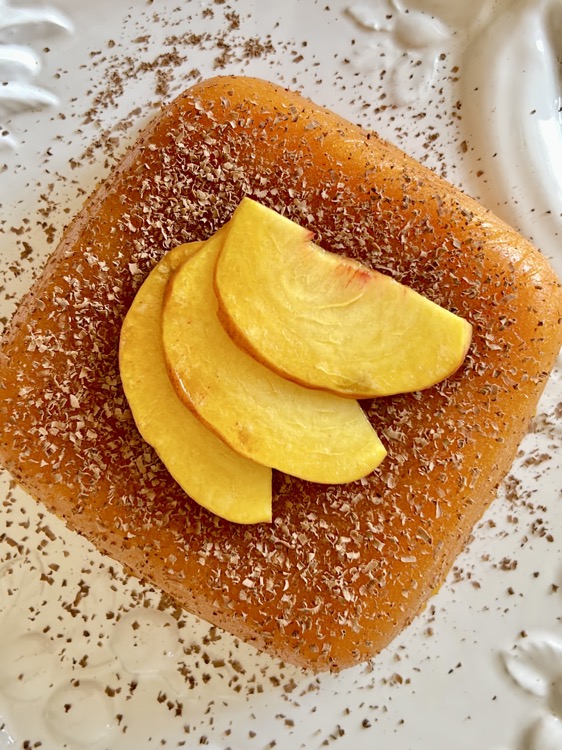
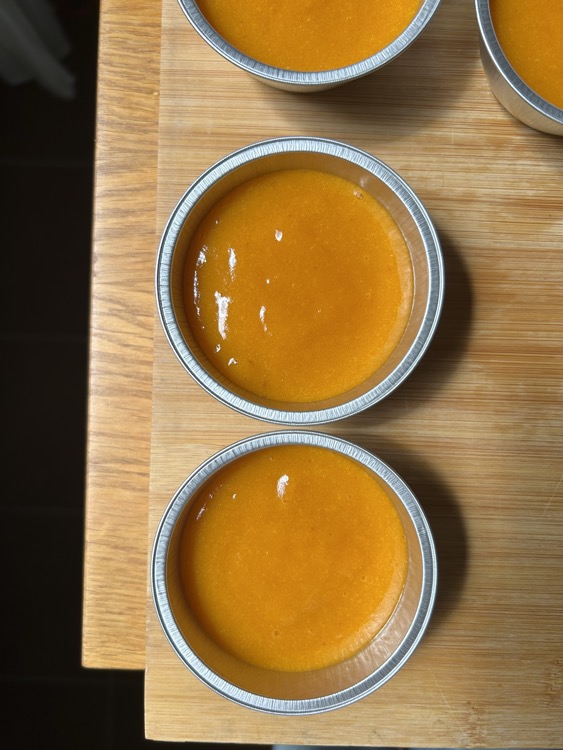
You can make fruit puddings using whatever fruit you like.
When I was little, my grandma used to make them with peaches, apricots, and plums. She never mixed them, each time, the pudding had a distinct flavor.
My mom remembers that nonna used flour or starch as a thickening agent before she started using gelatin sheets.
I’ve always used gelatin too, but this summer I experimented a lot with agar-agar, a plant-based gelling agent that, unlike gelatin sheets, also known as isinglass, is a vegetarian and vegan option.
However, I should warn you that this thickener has a few pitfalls, especially when combined with acidic ingredients (such as lemon juice and fruit itself).
But if you want to make this fruit dessert vegan, you’ll have to experiment, or at least start gaining some experience.
You learn from your mistakes, and you won’t waste anything anyway. If the pudding doesn’t set, eat the fruit as jam.
But what, exactly, could go wrong?
Peach, Apricot, and Plum Pudding (also vegan)
Gelatin sheets versus agar-agar
Gelling with sheet gelatin is easier. But for a vegetarian and vegan version, use agar-agar. The dessert turns out a little softer, but in my opinion, it’s still pudding-like.
If you usually use gelatin, go ahead as usual.
Soak the sheets in cold water for 10 minutes to soften them. After that, squeeze them out well, place a small saucepan on the stove with a small amount of fruit purée or other liquid, it shouldn’t boil, add the sheets, and dissolve them while stirring.
Add the mixture to the fruit mixture when it’s lukewarm or cold, stir vigorously, and then pour the pudding into the mold.
The trickiness of agar-agar
Acidity is the enemy of this ingredient. And incorporating it seems easy, but…
If something goes wrong, you’ll only find out when—after letting the peach pudding set—you try to turn it out and see that it’s still too soft.
In this case, there’s a solution, and it’s simple. Just serve it in small cups with a scoop of ice cream or whipped cream as a garnish.
But what could possibly go wrong?
The mixture was too acidic, which negated—or reduced—the gelling effect of the agar-agar.
What causes this?
- The fruit (very acidic, like apricots).
- The lemon juice—you either added too much or added it at the wrong time.
- You reduced the amount of sugar in the recipe without realizing that it helps lower acidity, which aids the agar-agar.
Finally, agar-agar has another problem: if you boil it too much or not enough, it doesn’t work as it should.
How to use agar-agar
Dissolve the agar-agar separately in a small amount of lukewarm water; add it to the fruit only after it has been cooked and pureed. Boil for at least 3 minutes, and if you want to use lemon juice, add it at the end of cooking—but never more than the juice of half a lemon.
After many trials, I realized that a large amount of agar-agar doesn’t necessarily result in a better texture but, if anything, a worse flavor.
The gelatin sheets make the pudding firmer, but if you’re looking for a vegetarian/vegan option, you can’t take the easy way out.
As I’ve already mentioned, if this is your first attempt, let the agar-agar pudding cool in single-serving ice cream cups; that way, you won’t have to turn it out.
Experience helps, and, as always, you learn from your mistakes, even in the kitchen.
These are my measurements for gelatin and agar-agar:
- apricot pudding: 8 g agar-agar / 12 g sheet gelatin, 400 g sugar, and no lemon juice
- plum pudding: 6 g agar-agar / 12 g sheet gelatin
For the peach pudding, check out the recipe.
Keep in Touch
- I write a newsletter called Kitchen Notes from Bologna, where you can find stuff about food history, culinary memories, and recipes.
- I’m on Instagram!
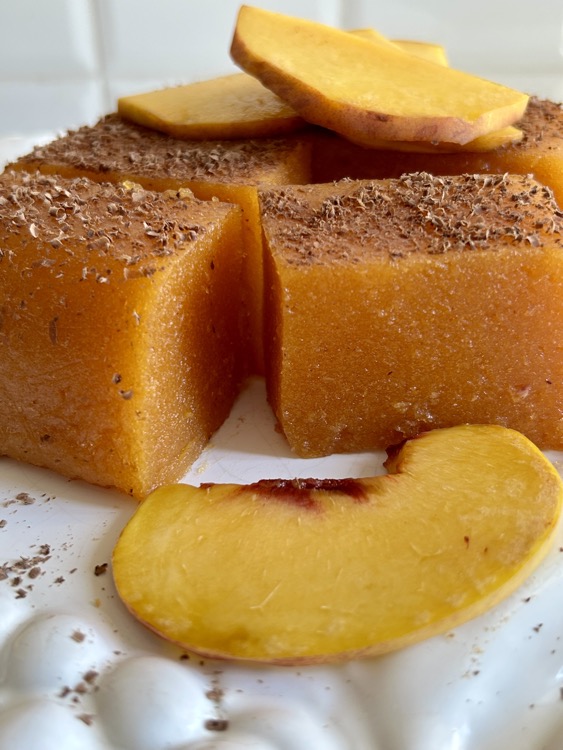
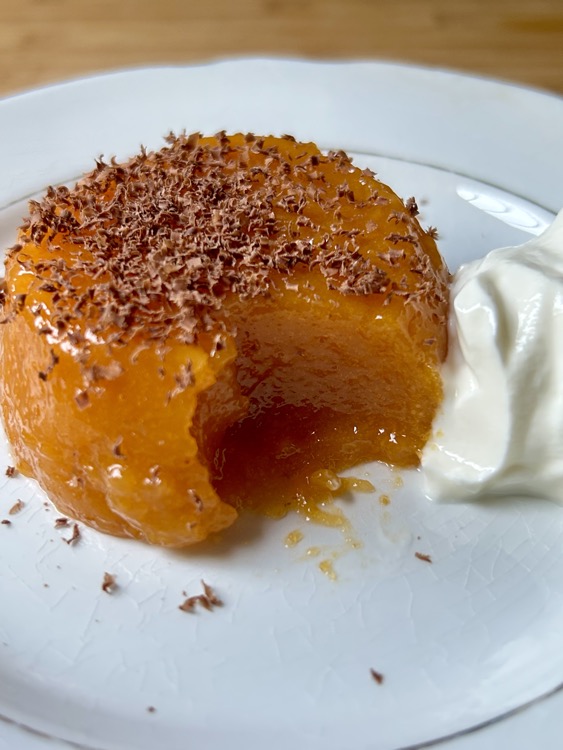
Peach pudding
Equipment
- 1 round or rectangular mold with a 1-liter capacity
- 1 immersion blender
Ingredients
- 1 kg of yellow-fleshed peaches You can also use apricots or plums; see the table before the recipe for ingredient amounts
- 300 g of sugar
- 12 g of gelatin sheets or 6 g agar-agar read the instructions before the recipe on how to use it
Instructions
- Peel the fruit, cut it in half, remove the pit, and then cut it into pieces.
- In a deep saucepan, combine the sugar and peaches, place it on the stove, and cook slowly until the sugar dissolves; then bring to a boil for 1 minute, then lower the heat.
- Cook the fruit for 30 minutes over low to medium-low heat, stirring occasionally. If the fruit releases a lot of liquid during cooking, extend the cooking time by 10–15 minutes.
- When the fruit is almost done cooking, soak the gelatin sheets in a little cold water for 10 minutes. Then squeeze out the excess water and melt the gelatin on the stove using a few spoonfuls of the fruit mixture.
- When the pudding is lukewarm, add the melted gelatin, stir vigorously, and pour into a pudding mold lined with plastic wrap.
- Store in the refrigerator overnight before serving.
Tips
- You can use any mold you like, round or rectangular, or individual-serving molds.
- Store the peach pudding in the refrigerator for 3–4 days, or in the freezer for one month.