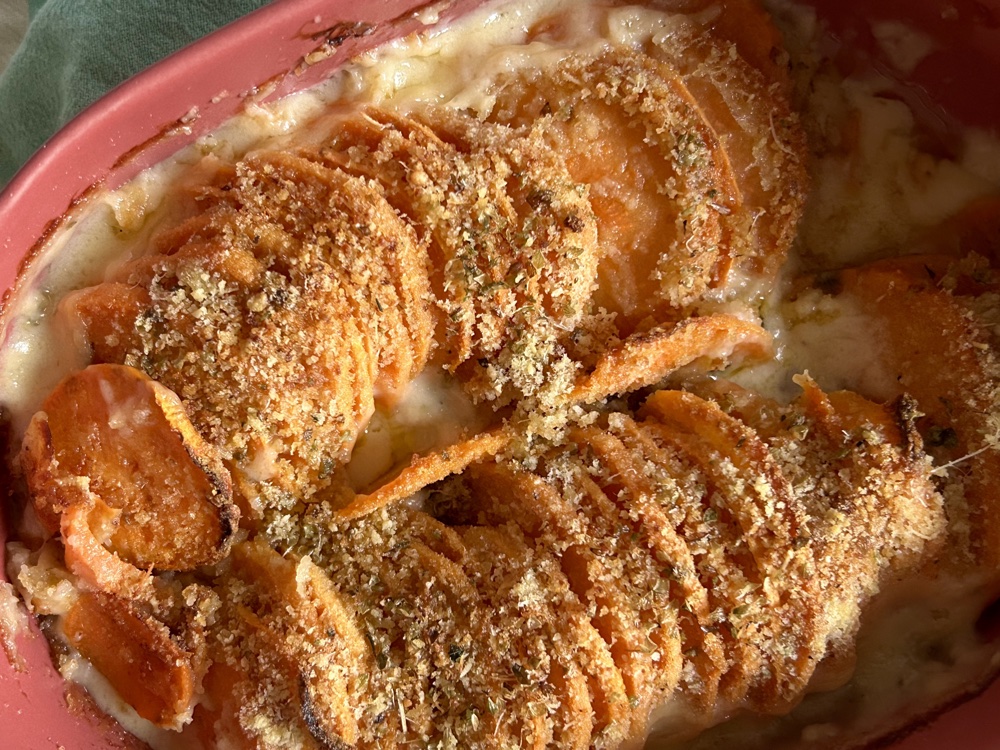
For some years now, orange potatoes have been easy to find in Italian kitchens, and often my Instagram followers ask me for a recipe that makes the most of this slightly sweet tuber in a savory dish. I usually slice these potatoes thinly and bake them in the oven, sprinkled with plenty of Parmesan cheese.
For the blog, I have chosen a recipe that is just as easy but enhanced with béchamel sauce, which gives the dish the right touch for festive occasions, Sunday lunch, or when you have guests.
This sweet potato gratin can be served as a side dish or main course, and is obviously accompanied by other vegetables.
You choose based on the time you have for cooking and the occasion.
With a couple of potatoes, a little béchamel sauce, and a mixture of breadcrumbs, Parmesan cheese, thyme, and salt, you’ll make a great impression, however you decide to serve the dish.
You can prepare the dish in advance, for example, the day before: refrigerate it and bake it in the oven just before serving.
My table is becoming a triumph of side dishes.
Not only in my daily routine. Currently, my dinner is almost always a combination of two side dishes. But also during lunches with friends and family, which celebrate the colorful richness of a table laden with vegetables. Many dishes are designed to create a harmonious symphony of flavors, resulting in a unique, rich, and always appreciated dish.
Keep in Touch
- To receive unpublished recipes, tips, and food stories, sign up for the Tortellini&CO newsletter.
- Follow me on Instagram.
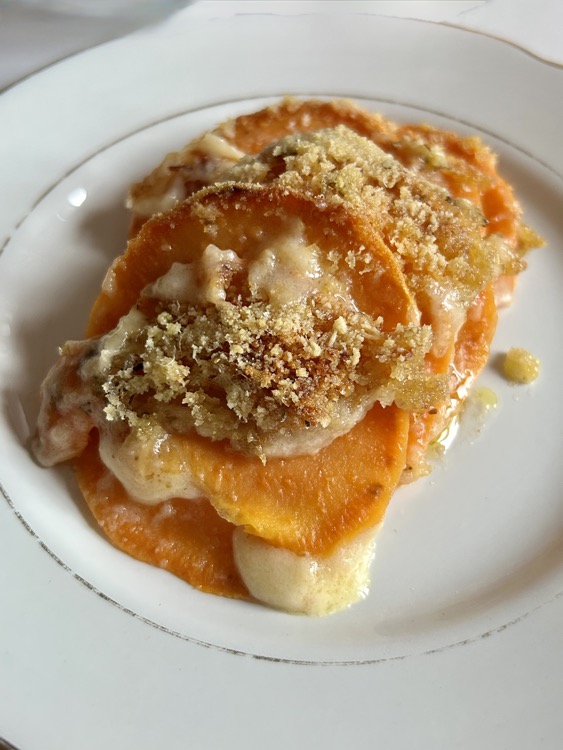
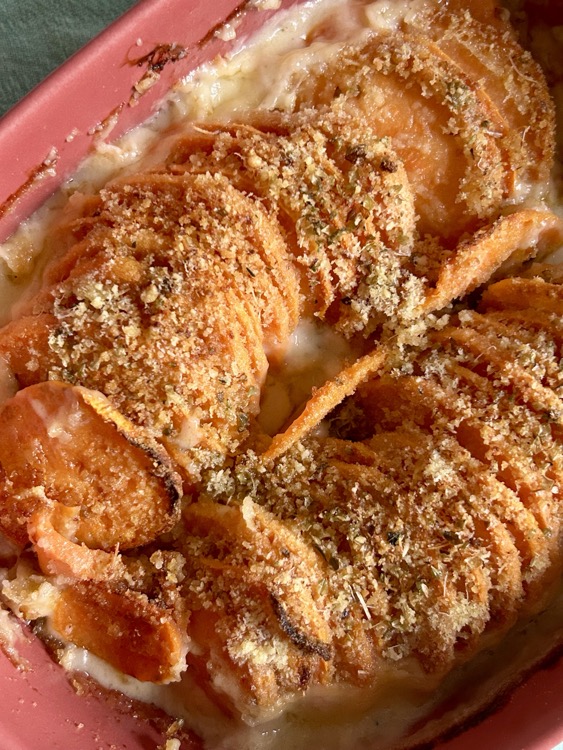
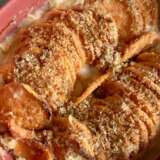
Baked sweet potato gratin with béchamel and Parmigiano
Equipment
- 23 cm x 17 cm baking dish
Ingredients
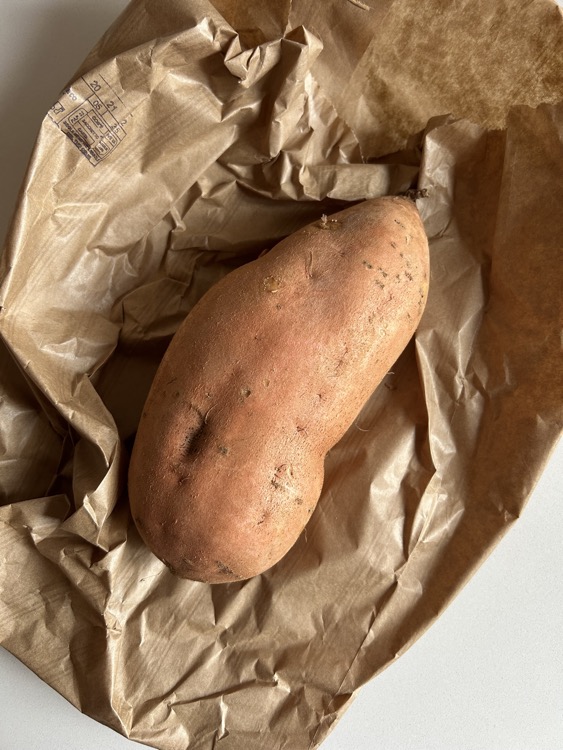
- 1 kg of orange flesh sweet potatoes, roughly the same size, or 2 large orange potatoes
- 200 ml of béchamel sauce
- 100 g of breadcrumbs (without any aromas)
- 50 g of grated Parmigiano Reggiano or Pecorino or Grana Padano cheese
- 2 g of dried oregano or other herbs of your choice
- 1 or 2 g of salt
- 15 g of grated Parmigiano Reggiano
Instructions
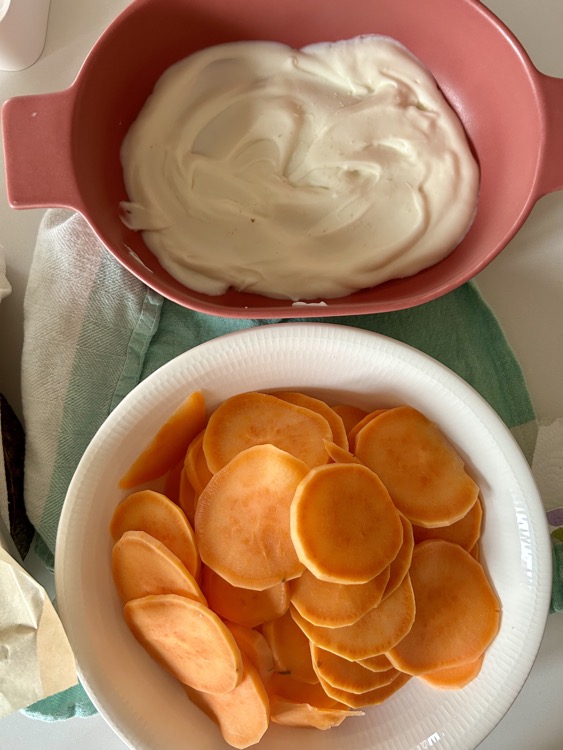
- Remove the ends and skins from the potatoes. Cut into thin slices about 4 mm thick.
- Fill a large pot with hot water, add salt as you would for pasta, bring to a boil, and add the potatoes. Once the water returns to a boil, cook the potatoes for 3 minutes. They should be cooked but still crisp.
- Using a slotted spoon, transfer the potatoes to a baking dish.
- While the potatoes cool, spread the béchamel on the bottom of the baking dish.
- Preheat the oven to 190 degrees Celsius (375°F).
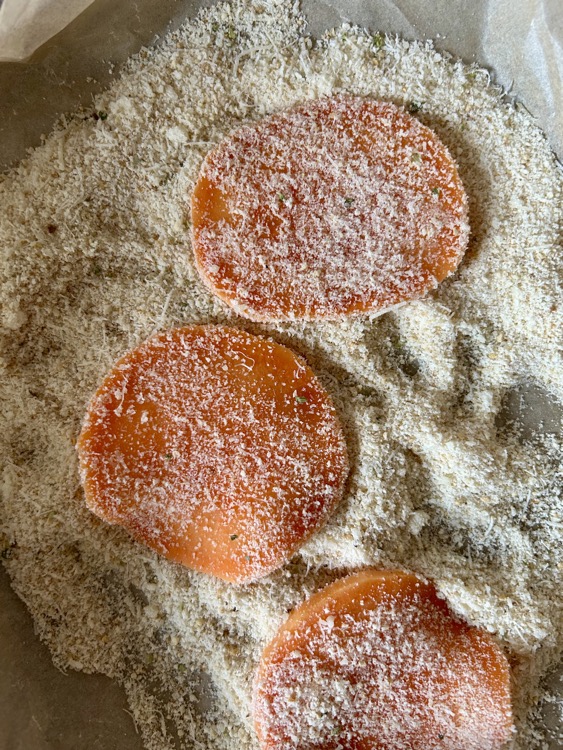
- Mix the breadcrumbs, cheese, oregano, and salt, and pour the mixture into a large baking dish.
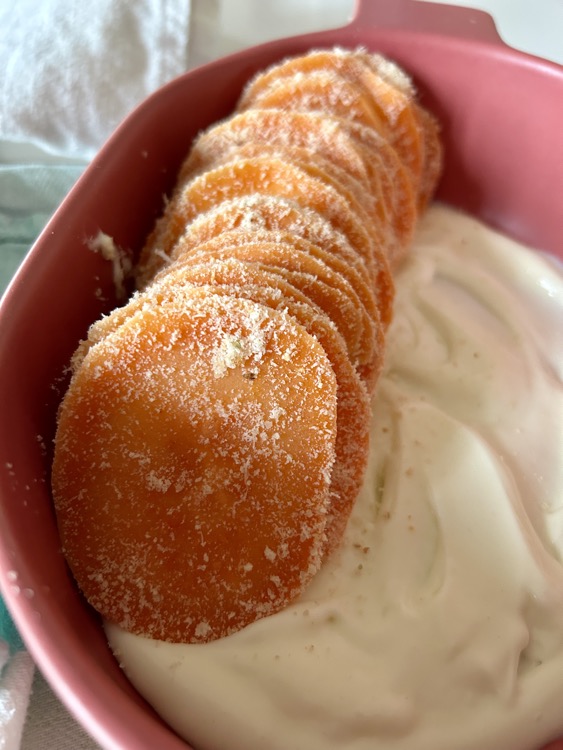
- Coat the potatoes in the mix, shake off any excess breadcrumbs from the slices, and arrange them vertically in two rows until the baking dish is full. If there are any breadcrumbs left over, sprinkle them over the potatoes. Sprinkle with more Parmesan and drizzle with oil.
- Bake in the oven for 15 minutes, then turn on the grill function for the remaining time I have indicated, or until they are golden brown to your liking. If you don't have a grill, increase the oven temperature
Tips
- If you want to peel and slice the potatoes before cooking them, for example, the night before, leave them in a bowl of cold water outside the refrigerator until you are ready to use them.
- You can prepare the baking dish in advance, for example, the day before: store it in the refrigerator and bake it in the oven just before serving.
- Serve the dish as a side dish for 6 or a main course for 4 people (in this case, prepare a side dish as well).
Side dish or main course?
Once upon a time, there were side dishes. When side dishes were secondary to the main course, usually a roast. Today, however, they are the protagonists of a change that has revolutionized the table and even our eating habits.
The side dish, as the word itself suggests, originated as a serving of raw or cooked vegetables intended to accompany the main course. However, as often happens with recipes, they have demonstrated an excellent capacity for evolution, gradually becoming a single dish and a course depending on the occasion.
From a splash of color, playing a supporting role, to protagonists. From the periphery of the table, they conquered the center.
On the bourgeois table of the twentieth century, Sunday lunch or the celebration of an event was made special in equal measure by the first course, the roast, always accompanied by several side dishes, and dessert.
Historically and culturally, the language of the side dish had to convey well-being, hospitality, and reverence.
American writer and chef Michael Roberts, in an article for the Los Angeles Times, wrote that side dishes are indicators that define the festive table: “It’s the multitude of side dishes, not the core of the meal, that defines our traditional feasts.”
In short, the number of side dishes accompanying the main course was an implicit recognition of affection for the diners and the importance of that convivial moment.
However, some things have changed. In everyday cooking, side dishes have taken on a new role compared to even the recent past. The same is true for more important lunches, when the menu often consists of a first course and a sequence of side dishes that are no longer merely accompaniments but are themselves the main course.
Sometimes, the menu is a single dish consisting of several side dishes, where vegetables, cooked and raw, are served together, leaving the diner free to decide how to mix the flavors.
I support this gentle revolution, which brings vegetables and, consequently, the theme of the seasons to the center of our table. A change that, above all, simplifies things when I have guests for lunch.
After an appetizer or first course, I serve a dish consisting of many side dishes. Everyone chooses what they want, composing their plate to their own taste. And I take the opportunity to enjoy the moment without being preoccupied with heating this or that while the others wait at the table.
Two side dishes to cook without going crazy in the kitchen:
- Roasted carrots glazed with honey and thyme
- Radicchio salad with plums, Roquefort cheese, and, if you like, diced prosciutto
Here is a link to an article by Shruthi Baskaran-Makanju for The Seattle Times, about how sides are now the main event: