Tortelli alla lastra and bartolacci are the same thing.
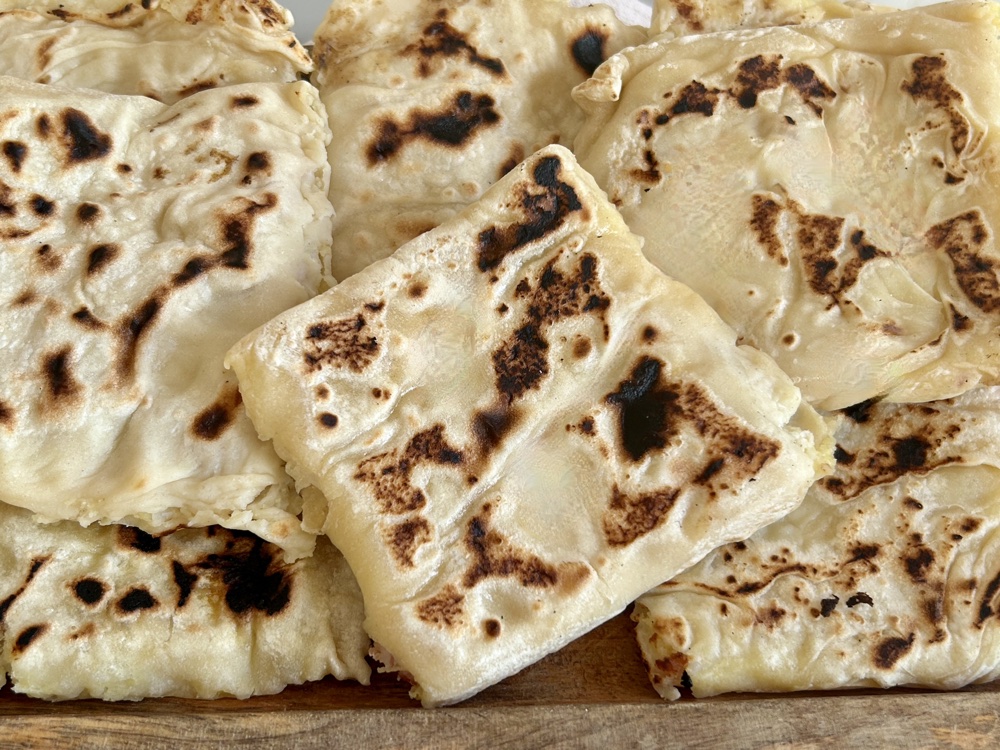
The term bartolaccio refers to tortelli alla lastra from the village of Tredozio, a town in the Romagna Apennines, part of the area known as Romagna-Toscana. Every year, this town holds a festival dedicated to bartolaccio. Compared to the tortelli alla lastra, common in Romagna and Tuscany, it is usually rectangular and filled with potatoes, pancetta, and grated cheese.
Tortelli alla lastra. A traditional stuffed pie from Romagna.
Although the name recalls that of fresh pasta, tortelli alla lastra, which can be rectangular, square, or crescent-shaped, are similar to Romagna crescioni. Tortelli alla lastra are the peasant and mountain version of crescioni.
The dough, made from water and flour and rolled out thinly, harks back to ancient times. When the Apennines were populated by shepherds who, during transhumance, brought with them simple food such as these tortelli, which they cooked on a slab or a tile that was once a flat stone heated over a fire and then placed over the embers in the fireplace. The cooking technique, handed down over time, maintains a strong link to mountain peasant traditions, even though we cook it on the stove top today.
The same can be said of the filling, which, especially in the past, was made of pumpkin or potatoes. And still today, it is made with pumpkins, potatoes, grated cheese, and whatever you have on hand. It is a dish of cucina povera with a modern twist. The word tortelli indeed derives from the presence of a dough that envelops a filling, like for fresh pasta.
The recipe is recognized as a Traditional Agri-Food Product (PAT) in both Emilia-Romagna and Tuscany.
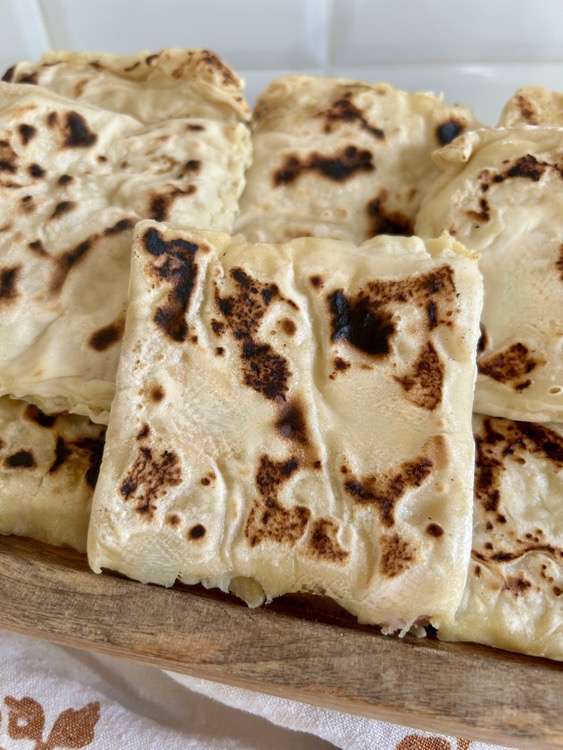
A memory that takes me back to Romagna
I can still see the skilled, age-old gestures of the women of Tredozio as they prepare the fillings and dough, roll out the pastry, fill and shape the bartolacci using the edge of a plate. I will never forget that gesture.
It all started with a vacation in Romagna Toscana area that I wanted to show my husband. I love this area of Romagna, which has been the destination of many trips and Sunday lunches with my family. It was the summer after the great turmoil of COVID, when we didn’t know what to do. So we decided to go on vacation without straying too far.
It was one of the best vacations of our lives.
We slept in the hills above Tredozio, surrounded by silence, between cultivated fields and woods. I remember only blue skies, strozzapreti pasta, piadina flatbread, and many flavors that I had forgotten, like the garlic sauce typical of Tredozio and bartolacci.
Then I tasted the former in the historic hotel restaurant in the village and fell in love again with that simple sauce, garlic and tomato, where the former cooks for so long that it becomes very sweet. I also asked the greengrocer whether and when the Bartolacci Club would be open, which is just a room on the street with a handwritten sign. It was open the next day. For me.
It’s always like that in villages. There’s always someone ready to open a door and lend a hand.
In this spirit, I share the recipe and the gestures, remembering the fragrant tranquility I breathed in that dimly lit room on a hot summer day.
Buona cucina, Monica
Cooking notes
The dough for tortelli alla lastra is more similar to that of erbazzone, a typical peasant and mountain dish from the Reggio Emilia area, than to that of crescioni romagnoli. Both recipes are on the blog.
Keep in Touch
- To receive unpublished recipes, tips, and food stories, sign up for the Tortellini&CO newsletter.
- Follow me on Instagram.
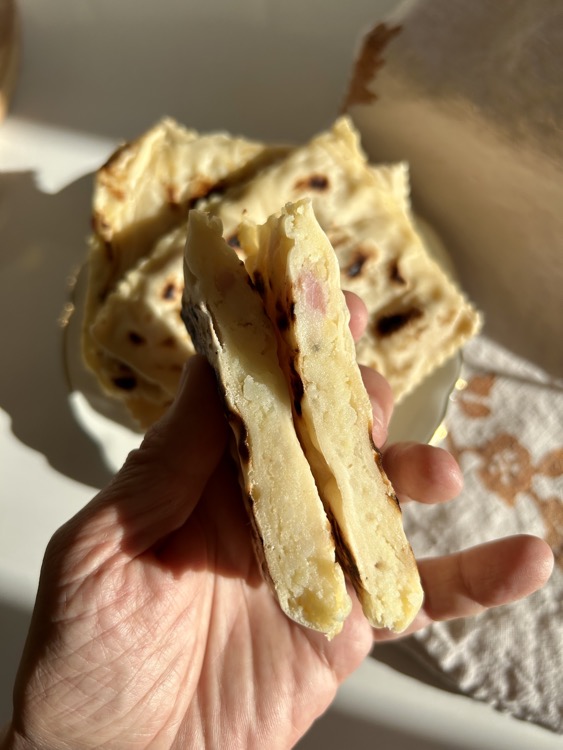
Tortelli alla lastra. Traditional stuffed pie of Romagna
Equipment
- cutting board; pasta cutter or knife
Ingredients
Potato and pancetta (or sausage with no specific aromas) filling
- 400 g of potatoes for purè
- 100 g of sweet pancetta or sausage If you are not using pancetta, add a little extra grated cheese
- 100 g of grated pecorino or Parmesan cheese
- salt and rosemary to taste
Pumpkin and potato filling
- 300 g of potatoes for purè
- 200 g of pumpkin pulp
- 110 g of grated Pecorino cheese
- salt, pepper, nutmeg, rosemary
- optional: you can add chopped shallots to the filling, gently cooked in a pan with a bit of olive oil
Dough
- 500 g of 00 flour or all-purpose flour
- 200-300 ml of water, you can also use the water used to cook the pumpkin
- 6 g of Cervia salt, or another sea salt
Instructions
Potato and sweet bacon (or sausage) filling
- If you are preparing both fillings, cook the potatoes for fillings 1 and 2 together.
- Boil the potatoes with their skins on in cold water until they are soft.
- Allow to cool, then peel and mash them. Divide into two portions of 300 and 400 g and set aside.
- In a pan, cook the finely crumbled pancetta or sausage for a few minutes (if using sausage, chop it further with a knife after cooking).
- Add the mashed potatoes to the pan and cook for another minute.
- Pour the mixture into a bowl, add the grated cheese, season with a pinch of salt, and, if you like, a few chopped rosemary leaves, fresh or dried. Set aside.
Pumpkin and potato filling
- Remove the skin and strings from the pumpkin, and cook in ½ liter of lightly salted water for 15 minutes or until soft. Do not throw away the water if you want to use it in the dough. Remove the pumpkin from the cooking water, and mash the pulp with a fork or potato masher.
- In a bowl, mix the pumpkin with 300 g of potatoes, then add the cheese, salt, pepper, ½ teaspoon of nutmeg, and, if you like, the aroma of rosemary (dried or fresh, a few chopped leaves). Knead and set aside.
Dough
- In a bowl, mix the flour with the salt and add the water a little at a time. You will need about 300 ml of water, which can also be the water used to cook the pumpkin. The type of flour you use will determine how much water your dough needs. No problem, but after the first 100 ml, add the liquid a little at a time. I have already written this above, but repetition helps.
- When large crumbs form, transfer to a pastry board and knead until the dough is elastic and soft. Cover with a cloth or bowl and let rest for 30 minutes to an hour. If you are using two different fillings, cut the dough in half and follow the same procedure for both.
Tortelli alla lastra
- After this time, roll out the dough into a thin sheet using a rolling pin. This dough is very elastic, similar to that used for erbazzone, so use your hands to form a rectangle.
- Before filling, lift the dough and dust the cutting board with flour to prevent it from sticking when spreading the filling.
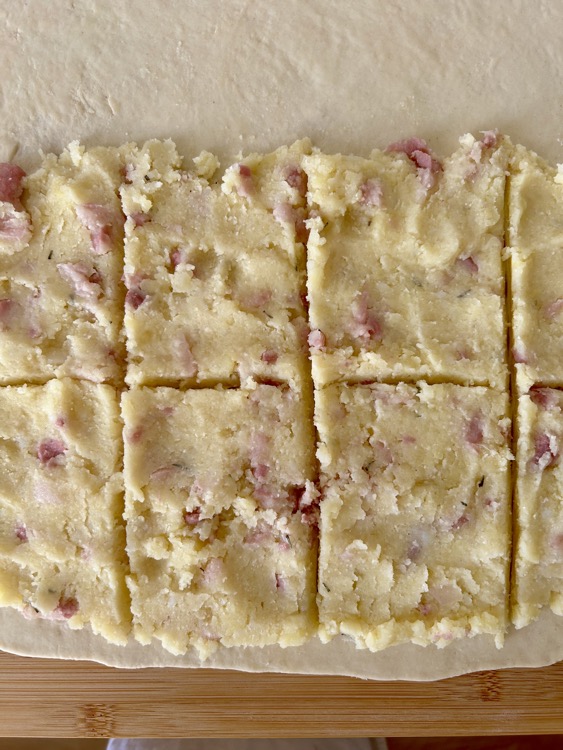
- Spread the filling in a thin, even layer over half of the sheet. Using a spoon or fork, make grooves in the filling about ½ cm deep, forming rectangles measuring 8 cm by 5 cm or 10 cm by 7 cm. Or whatever size you want.
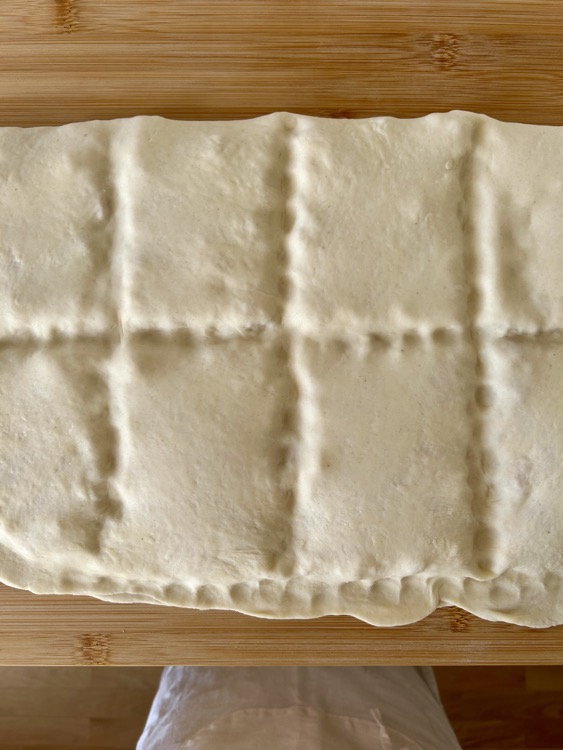
- Fold the dough over itself, then use your finger to run over the grooves you created before sealing the outer edges. First press with your fingers or a fork, then cut off the excess dough with a pastry wheel.
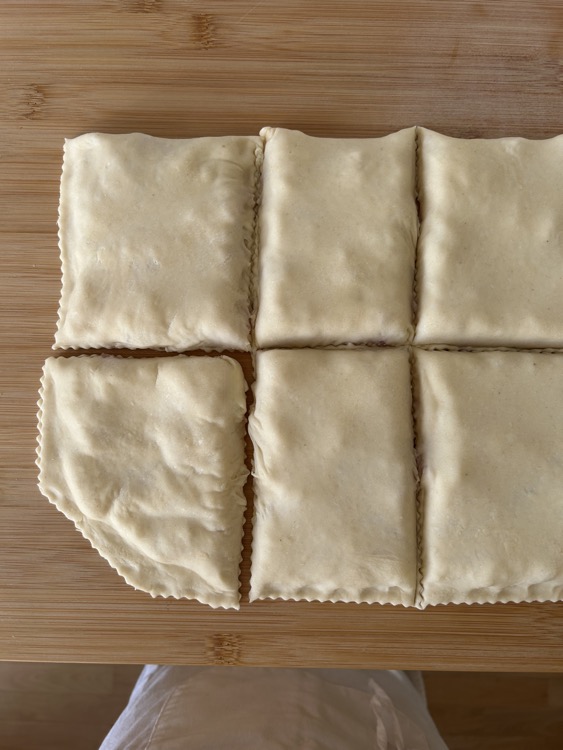
- Run the edge of a plate vertically along the grooves and use the pastry wheel to make the final cut.
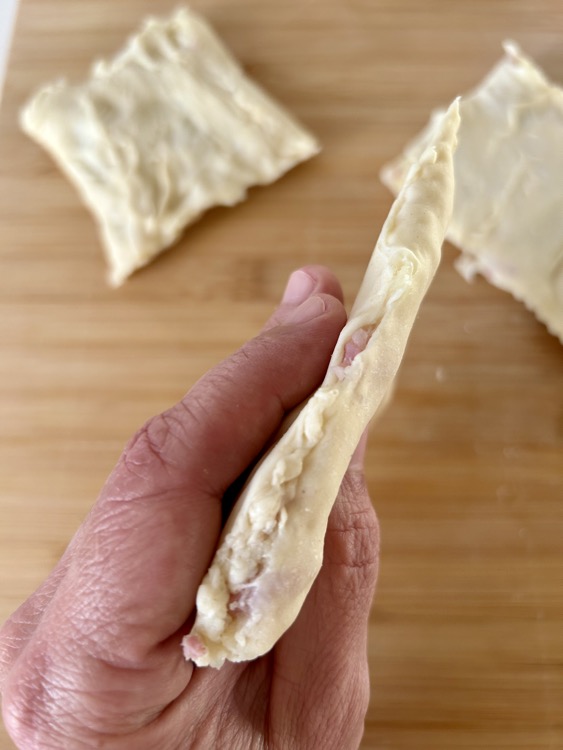
- Remove the tortelli with a spatula. If the edges of some tortelli are not perfectly sealed, don't worry. The filling is dense and will not escape during cooking. In this regard, see the photo sequence below the recipe.
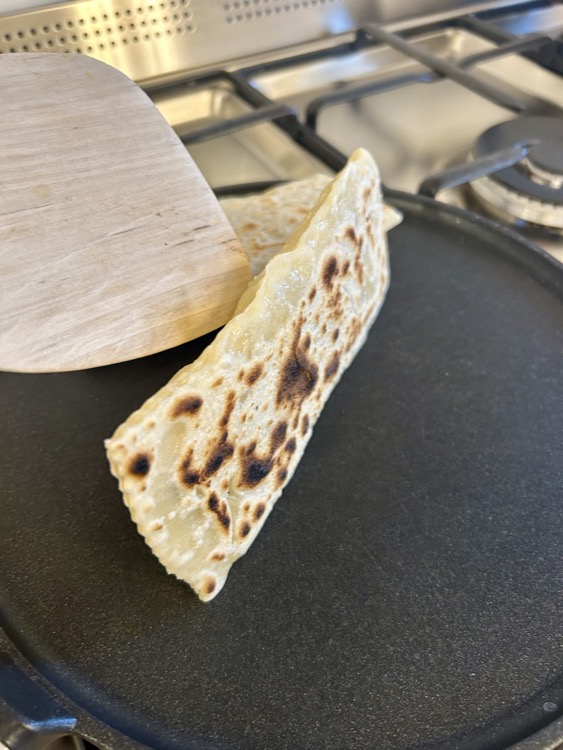
- If you have a rough sandstone slab like the Romagna baking tray from Montetiffi, use it. Otherwise, a modern cast-iron griddle will also work. Cook each tortello for 3-4 minutes on each side. Don't forget the long side. See the photos below the recipe.
Tips
- You can eat them hot, warm, or at room temperature.
- With half the amount of water and flour, and, of course, the filling, I make 8 tortelli of the indicated size. Sometimes I make them bigger, especially if I plan to eat them for dinner.
- After cooking them, let them cool first, then you can put them in the freezer.
- If you don't eat them immediately after cooking, cook them for 2 minutes on each side instead of 4 and finish cooking by reheating them before serving. This will make them more fragrant rather than overcooked and a little bit dried.