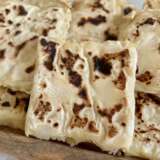
Tortelli alla lastra. Traditional stuffed pie of Romagna
Tortelli alla lastra are the peasant and mountain version of Romagna's crescioni. Made with a dough of water, flour and salt, they are filled with pumpkin or potatoes.
Servings 6 serves
Equipment
- cutting board; pasta cutter or knife
Ingredients
Potato and pancetta (or sausage with no specific aromas) filling
- 400 g of potatoes for purè
- 100 g of sweet pancetta or sausage If you are not using pancetta, add a little extra grated cheese
- 100 g of grated pecorino or Parmesan cheese
- salt and rosemary to taste
Pumpkin and potato filling
- 300 g of potatoes for purè
- 200 g of pumpkin pulp
- 110 g of grated Pecorino cheese
- salt, pepper, nutmeg, rosemary
- optional: you can add chopped shallots to the filling, gently cooked in a pan with a bit of olive oil
Dough
- 500 g of 00 flour or all-purpose flour
- 200-300 ml of water, you can also use the water used to cook the pumpkin
- 6 g of Cervia salt, or another sea salt
Instructions
Potato and sweet bacon (or sausage) filling
- If you are preparing both fillings, cook the potatoes for fillings 1 and 2 together.
- Boil the potatoes with their skins on in cold water until they are soft.
- Allow to cool, then peel and mash them. Divide into two portions of 300 and 400 g and set aside.
- In a pan, cook the finely crumbled pancetta or sausage for a few minutes (if using sausage, chop it further with a knife after cooking).
- Add the mashed potatoes to the pan and cook for another minute.
- Pour the mixture into a bowl, add the grated cheese, season with a pinch of salt, and, if you like, a few chopped rosemary leaves, fresh or dried. Set aside.
Pumpkin and potato filling
- Remove the skin and strings from the pumpkin, and cook in ½ liter of lightly salted water for 15 minutes or until soft. Do not throw away the water if you want to use it in the dough. Remove the pumpkin from the cooking water, and mash the pulp with a fork or potato masher.
- In a bowl, mix the pumpkin with 300 g of potatoes, then add the cheese, salt, pepper, ½ teaspoon of nutmeg, and, if you like, the aroma of rosemary (dried or fresh, a few chopped leaves). Knead and set aside.
Dough
- In a bowl, mix the flour with the salt and add the water a little at a time. You will need about 300 ml of water, which can also be the water used to cook the pumpkin. The type of flour you use will determine how much water your dough needs. No problem, but after the first 100 ml, add the liquid a little at a time. I have already written this above, but repetition helps.
- When large crumbs form, transfer to a pastry board and knead until the dough is elastic and soft. Cover with a cloth or bowl and let rest for 30 minutes to an hour. If you are using two different fillings, cut the dough in half and follow the same procedure for both.
Tortelli alla lastra
- After this time, roll out the dough into a thin sheet using a rolling pin. This dough is very elastic, similar to that used for erbazzone, so use your hands to form a rectangle.
- Before filling, lift the dough and dust the cutting board with flour to prevent it from sticking when spreading the filling.
- Spread the filling in a thin, even layer over half of the sheet. Using a spoon or fork, make grooves in the filling about ½ cm deep, forming rectangles measuring 8 cm by 5 cm or 10 cm by 7 cm. Or whatever size you want.
- Fold the dough over itself, then use your finger to run over the grooves you created before sealing the outer edges. First press with your fingers or a fork, then cut off the excess dough with a pastry wheel.
- Run the edge of a plate vertically along the grooves and use the pastry wheel to make the final cut.
- Remove the tortelli with a spatula. If the edges of some tortelli are not perfectly sealed, don't worry. The filling is dense and will not escape during cooking. In this regard, see the photo sequence below the recipe.
- If you have a rough sandstone slab like the Romagna baking tray from Montetiffi, use it. Otherwise, a modern cast-iron griddle will also work. Cook each tortello for 3-4 minutes on each side. Don't forget the long side. See the photos below the recipe.
Tips
- You can eat them hot, warm, or at room temperature.
- With half the amount of water and flour, and, of course, the filling, I make 8 tortelli of the indicated size. Sometimes I make them bigger, especially if I plan to eat them for dinner.
- After cooking them, let them cool first, then you can put them in the freezer.
- If you don't eat them immediately after cooking, cook them for 2 minutes on each side instead of 4 and finish cooking by reheating them before serving. This will make them more fragrant rather than overcooked and a little bit dried.