
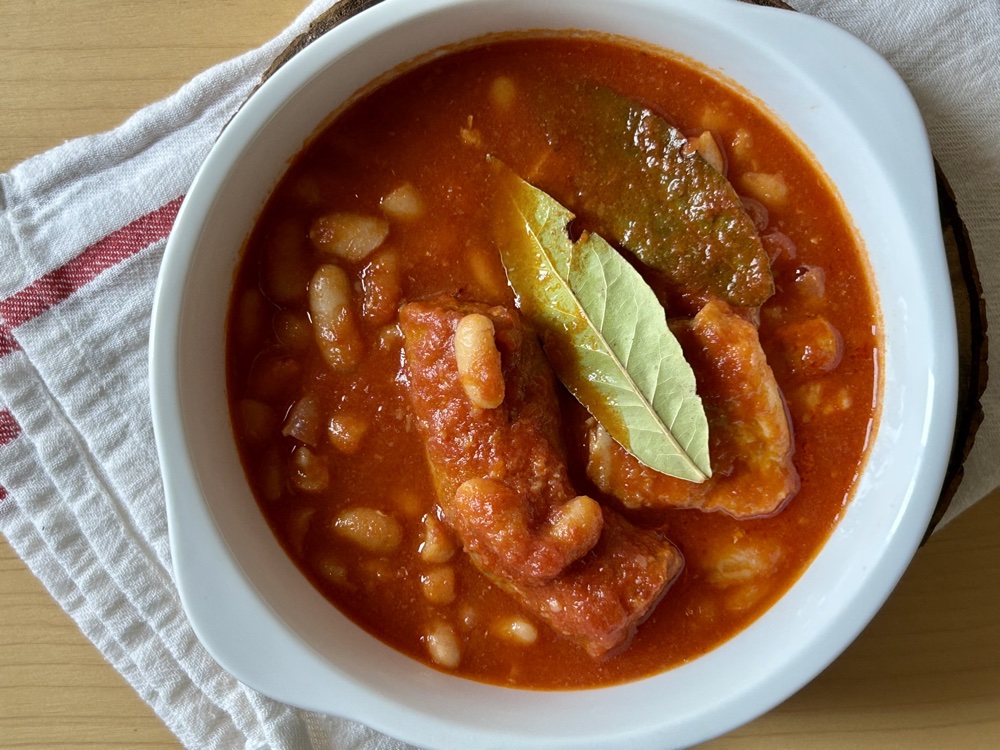
I started the year cooking hearty dishes, perfect for the season.
Like sausage and bean stew with Grandma Sara’s special touch: a few pieces of fresh pork belly, which makes the sausage sweeter during cooking and adds great flavor to the sauce.
Home cooking and casalinghitudine
I was in first grade when, at the end of the Christmas holidays, I discovered that I would have to leave the warmth of the kitchen and go back to school.
In the cold heart of winter, when January invites you to stay at home, I was put on the yellow school bus despite my proposal to retire (my parents still laugh). At that time, I didn’t know how to name the feeling I associate with January.
To describe the essence of my casalinghitudine, a neologism invented by the Italian writer Clara Sereni in 1984 that perfectly describes my feelings since I was a child, I must talk about days when time slows down, allowing me to observe, think, listen to myself, cook, and read.
It is a feeling that encompasses gestures, words, and spaces I tend to take for granted. Time to be here and now.
In such difficult times, the pleasure of being or returning home after work, touching my books, sitting at my desk in my study, going into the kitchen, and tying on my apron are gifts that I appreciate more than ever. Perhaps you, too.
Sausage and bean stew and traditional cuisine
When I was a little girl, Sunday was a special day. Unlike other days of the week, lunch consisted of a full menu. And, even though in the evening we returned to the rule of one dish and one side dish, the choice fell on something particular, such as grigliata mista or a stew, i.e., something that cooks for a long time in tomato sauce.
While the ritual of preparing the grill began in the basement, Italians call it tavernetta or taverna, the stew took shape in the family kitchen upstairs.
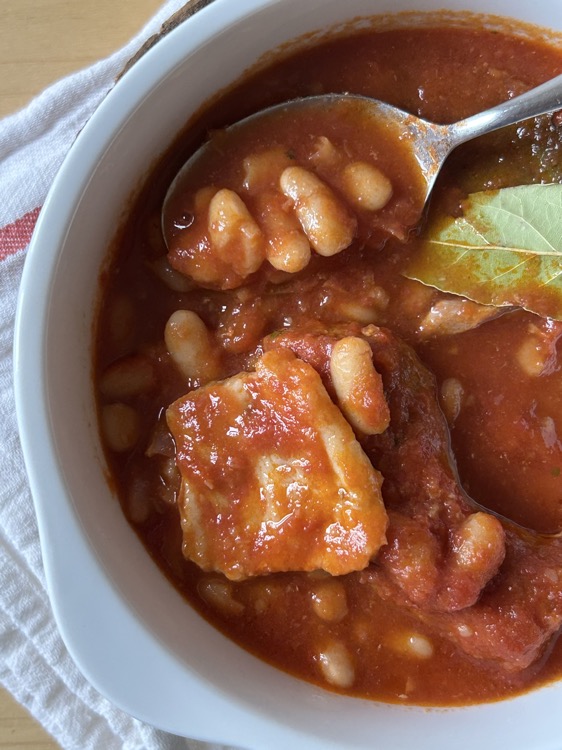
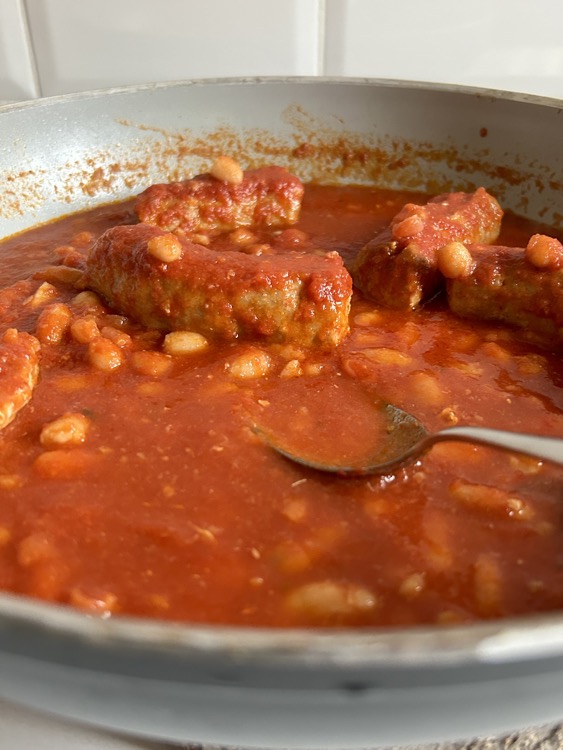
From my corner, I followed the steps. First the beans, then the meat, finally the tomato sauce. As time passed, the sauce’s aroma grew more intense, and its color changed from red to a golden-orange hue, indicating that the stew was cooked to perfection. In fact, it is cooked for a long time, but not too long. It has a robust flavor. It is a dish that satisfies and warms. There isn’t much room for elegant plating. The stew is pure substance and only needs fresh bread to dip into the sauce. The Italian scarpetta.
My cooking today is very similar to how it used to be. Not to mention that I cook dishes the way I learned from my grandmother. Sometimes I follow tradition. Sometimes, as she did before me, I change course to find my own way. It’s not disrespectful. On the contrary, it’s love. Innovation is a way to keep traditions alive, allowing a recipe to evolve and move forward.
Today’s January cuisine
To understand what food to write about and what recipes to share, I need to cook. Not surprisingly, I’ve spent many hours in the kitchen this month. I rigorously test old and new recipes to find the culinary focus for the new year, take notes, and see what works. Sometimes everything goes well, sometimes it doesn’t.
In any case, I love the creative process behind this newsletter and blog. And sharing food, with related discussions, with my tasters behind the scenes (family and friends).
Dishes I cooked in January
- Polenta, over and over again. The taragna variety is perfect for dark and stormy nights
- Soups and minestre: recently, I published my version of smoky ham and cannellini bean soup on the blog.
- Stews and meatballs, which my grandmother called intingoli
- Pantry cakes
Kitchen Notes about sausage and bean stew
Nonna would start by soaking the beans the night before. She used cannellini or borlotti beans, but more often cannellini. After rinsing them under cold water, she would place the beans and a few bay leaves in a large pan where all the ingredients could fit comfortably, pour in a generous amount of olive oil, and turn on the stove. After a couple of minutes, she would add the pancetta and then the sausage, first removed from its casing and cut into pieces.
Then, she cooked the meat for a few minutes before opening a bottle of tomato sauce from the previous summer, pouring it over the ingredients, then covering and cooking over low heat on a small burner for about 20 minutes. She would finish cooking for another 20 minutes with the pan uncovered.
At dinner time, no announcement needed, we were all already gathered around the table, with fresh bread in the basket and that good mood typical of when a scent whets the appetite and lifts the spirits.
Keep in Touch
- I write a newsletter called Kitchen Notes from Bologna, where you can find stuff about food history, culinary memories, and recipes.
- I’m on Instagram!

Sausage and bean stew
Ingredients
- 450 g of Italian, fresh sausage
- 100 g of fresh pork belly
- 350 g of ready-to-use cannellini or borlotti beans (read the tips at the bottom of the recipe)
- 20 g of olive oil
- a few sage or bay leaves, optional
- salt to taste
- 150 g of tomato sauce
- 50 g of water
Instructions
- Cut the sausage with a sharp knife and remove the skin. Then cut into pieces about 4-5 cm long. Set aside.
- Cut the pork belly into 3-4 cm wide pieces and set aside.
- In a large pan with borders at least 4 cm high, pour in the olive oil, sage or bay leaves, beans, and a generous pinch of salt. Cook over high heat on a small burner for 1 minute to heat the bottom of the pan, then add the pork belly and sausage.
- Cook the meat for 1 minute, then reduce the heat to low and cook for 3 more minutes.
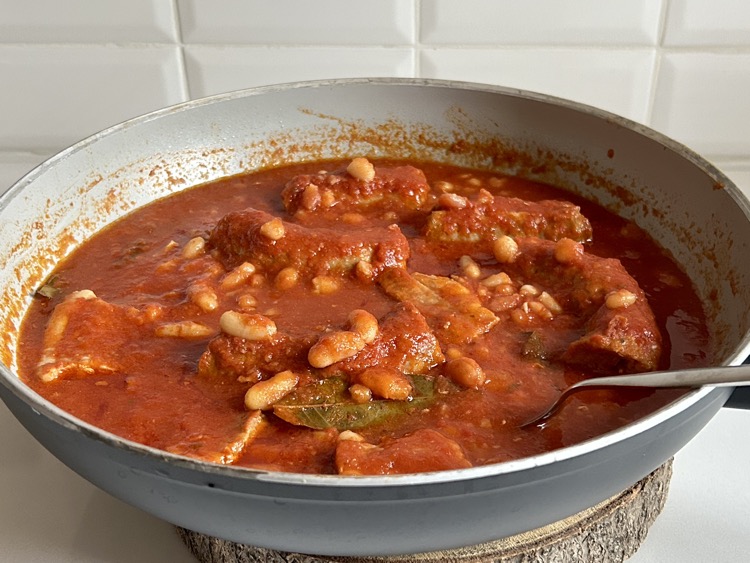
- Add the sauce and water, stir, cover the pan, and cook for 20 minutes. Remove the lid and cook for another 20 minutes, or until the sauce is thick to your liking. Taste and adjust the salt if necessary.
- Serve the stew hot or warm with bread aside.
Tips
- Beans: You can use either cannellini or borlotti beans. If using beans from a jar or can, rinse them under running water. If using dried beans, soak them for at least 8 hours and cook them in unsalted boiling water with a few bay leaves for 30 minutes before using them in the stew.
- You can prepare the stew one or two days in advance.
- Store leftovers in the refrigerator for 2 or 3 days.
January: working in the kitchen and beyond
- In November last year, Giovanna, a teacher at a municipal nursery school in Bologna, invited me to take part in the food education program she is running with classes of 3-, 4-, and 5-year-olds. In January, the first cooking session with the 4-year-olds took place. I knew it would not only be a different kind of work but also a regenerative challenge. And so it was.
- On the 2nd of January, I was already at my computer collating the different parts of the book I sent out in installments to paid subscribers in 2025. After a last reading of the Italian and English drafts, I sent out My Bologna rooftop kitchen (45 family recipes for every occasion). Anyone who wants to switch from a free plan to a paid one at any time in 2026 will find the book in the archive.
- I am currently working on a book of home recipes that can take care of us as well as, if not better than, medicine. I wrote about it in this newsletter, where you can also find a dessert recipe from the book.


