Aromas, like flavors, are evocative.
A single fragrance can transport you to many places.
Take, for example, smoky, warm, enveloping aromas. In my case, they awaken pleasant, comforting olfactory memories.
Wood burning in the fireplace in the basement. Bonfires in the countryside mark the change of seasons.
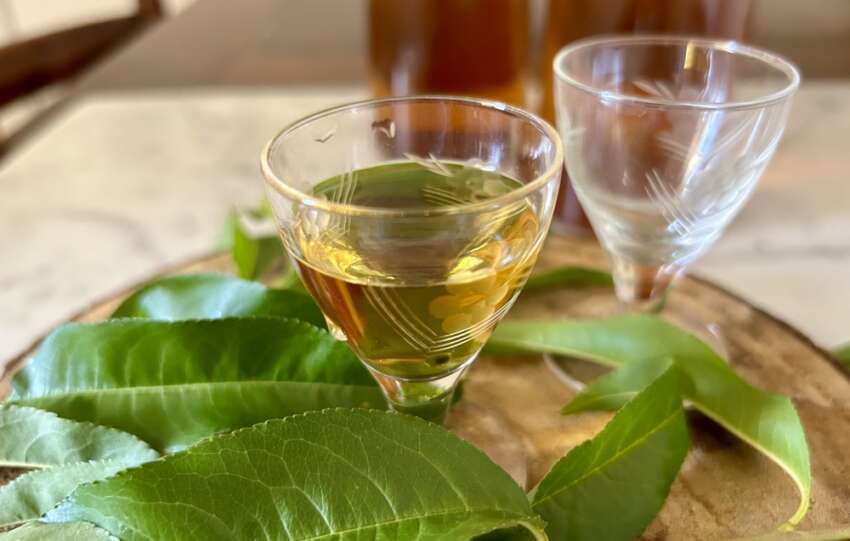
On the rare nights he is at home, I see my father pouring an amber-colored liquid into a tulip-shaped glass, and I bring my nose closer as he prepares his pipe. Another smell that, depending on the tobacco, I associate with the smoky fragrances that produce endorphins of good memories.
The same is true of the resinous, smoky smell of pine cones burning in the brazier.
Then there is the smoky smell I associate with food, that of mountain stoves where the wooden walls have absorbed the aroma of soups, roasts, and speck.
Over time, I have visited smokehouses as big as rooms. And every time, that intense, penetrating scent clung to my skin, hair, and clothes as if it wanted to come away with me. As if it knew it was a friendly smell. A scent that I find friendly, even when it moves from my nose to my palate and becomes a flavor.
In most of these memories, I am still a child. Smoked is a scent that has helped shape the olfactory and sensory map that defines me as a cook and perhaps even as a person.
Smoked, what a passion!
In my life, the 1980s were a turning point.
In the previous decade, everyday food was local and homemade.
After that, dry pasta, packaged snacks, tinned vegetables, powdered mixes, and new ingredients entered the kitchen.
Looking back now, it was the decade of the food revolution for Grandma Sara, my family, and a few million other Italians.
The 1970s were a gastronomic bridge between the past, when most of the food came from the nearby countryside or was still home-grown, and the future, which began with the opening of the first supermarkets.
In Italy’s big cities, the process began in the 1960s, while in most small towns in the huge Italian provinces, it began a little later.
Regardless of when it started, the transition is unstoppable.
People, including my family, shop at this new type of store.
At first, ties to the countryside are still strong. Then, you know how it goes. Little by little, points of reference disappear, and ties loosen.
Even in small provincial towns, like the one where I was born and raised, the new shopping venues and products on the shelves reflect the biggest change in Italians’ eating habits.
When fresh, local products are first flanked and then irreversibly overwhelmed by industrial ones.
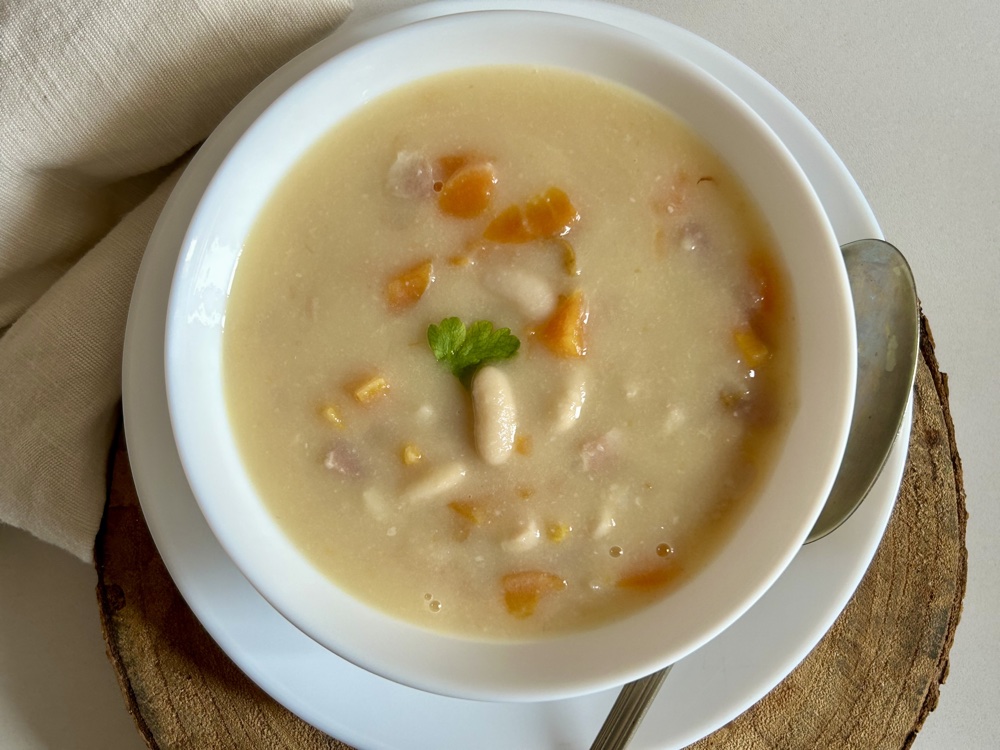
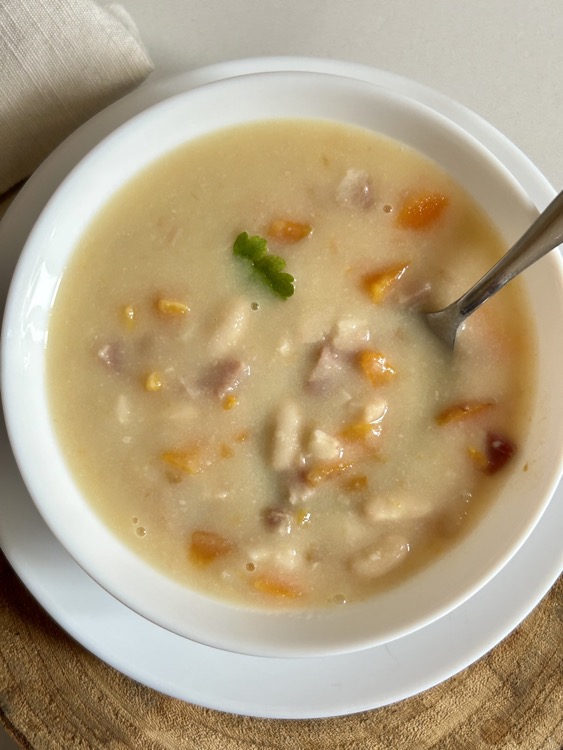
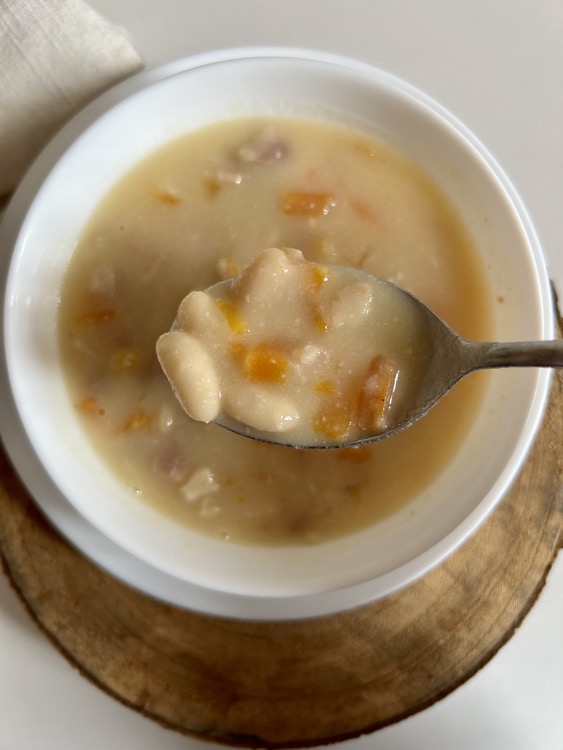
Smoky ham and cannellini bean soup is a dish that belongs to this period, when, in the early 1980s, my grandmother discovered the taste of smoked meats within easy reach. And what was once rarely eaten, such as speck, Prague ham, and bacon, became normal.
Smoked ham vs pork rinds
Bean soup was originally made with pork rinds.
It is a typical dish in many rural areas of Italy, including Romagna, and is flavorful and robust.
In the countryside, it was a dish made from leftovers, as pork rinds were one of the least valuable parts of the pig and were not intended for sale. They were often included in slaughterhouse workers’ salaries.
In addition to pork rinds, the soup also contained stale bread and dried beans, which could be cannellini or borlotti beans. Like pork rinds, beans were also affordable for almost everyone.
Today, pork rind is an ingredient of peasant cuisine that has been rehabilitated and ennobled.
And even though it is the central element in this traditional peasant dish, here I share the version I remember, the one rich in cubes of smoked ham, which, as my grandmother knew, goes really well with the rounded flavor of cannellini beans. Together, they create a bean soup worthy of a Sunday lunch.
A bean soup recipe you have to try at least once:
Keep in Touch
- To receive unpublished recipes, tips, and food stories, sign up for the Tortellini&CO newsletter.
- Follow me on Instagram.

Smoky ham and cannellini bean soup
Equipment
- casserole
- hand blender or mixer
Ingredients
- 300 g of ready-to-use cannellini beans If, like me, you use dried beans, soak 150 g of beans the night before and read the tips at the bottom of the recipe
- 50 g of onion
- 70 g of carrot
- 40 g of celery
- 15 g of butter
- 10 g of olive oil
- 3 g of parsley, washed, dried, and finely chopped
- 100 g of potato, 1 piece raw but peeled
- 700 ml of water or chicken, Parmigiano, or vegetable broth (all recipes are on the blog)
- salt, to taste
- 110 g of smoked ham or bacon, diced
- 300 g of 1-day-old bread, sliced 1 slice per plate
Instructions
- If using ready-made cannellini beans stored in glass or tin, rinse under running water and set aside. For dried beans, read the instructions at the bottom of the recipe.
- Keeping the vegetables separate, finely chop the onion, carrot, and celery.
- In a casserole over low heat, melt the butter in the olive oil. Add the onion and cook for 3 minutes, stirring, then add the carrot, celery, and half the parsley.
- Cook for 2 minutes, then add the cannellini beans. Turn up the heat and cook for 1 minute. Pour in the broth or water, add salt to taste, and add 100 g of potato to the pan.
- Then, cook for 10 minutes, bringing to a boil, then add the pancetta or smoked ham, lower the heat, and continue cooking over low heat for 30 minutes or until the cannellini beans are as soft as you like. I like them very soft.
- When cooked, remove 1/3 of the cannellini beans and the potato from the pan. Blend to a cream in a food processor or with a hand blender.
- Pour the cream into the pot and stir.
- Place the soup into bowls, sprinkle with parsley, add a drizzle of olive oil, and add the bread, which you can place at the bottom of the bowl and pour the soup over, or arrange on the side but inside the soup.
- Serve the soup hot with Parmigiano aside (I don't do this, but you can do as you like).
Tips
- If you prefer, use borlotti beans.
- If using dried beans, drain the beans from the soaking water, rinse under running water, and set aside. To reduce the soup's cooking time, I usually cook the beans in advance in unsalted boiling water with a few bay leaves for 30 minutes. The bay leaves are not necessary.