
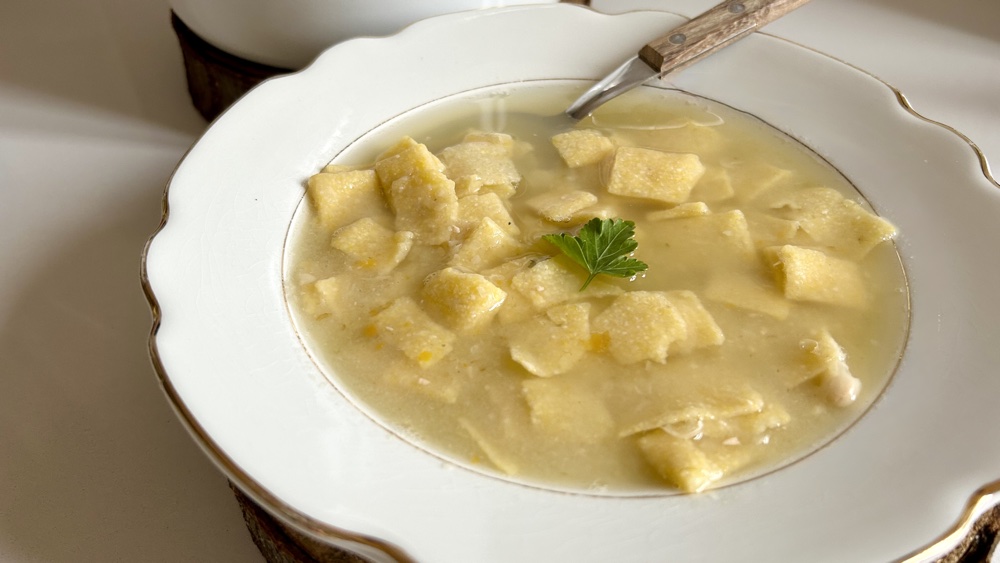
Giugetti is an identity dish of the cucina povera of Romagna.
Known as giugetti, giogetti, or patacucci, they belong to the large family of maltagliati and manfrigoli. They are small squares of sfoglia matta (eggless) cooked in a brodo matto (meatless broth) .
This forgotten dish was typical winter eating in the second half of the 19th century and the first decades of the 20th century, which disappeared after the end of World War II. The recipe characterized some areas of Romagna, such as Rimini (especially Montescudo and San Giovanni in Marignano) and Ravenna (Lugo and Faenza areas) in spots.
Since Imola is historically part of the Diocese of Imola and Lugo, giugetti is also known here. Imola is the place were I was born and raised and it is on the border between Emilia and Romagna. My mom remembers that Grandma Sara, the loving person who cooked our meals in the first two decades of my life, did not make giugetti; she only made bean broth for that dish.
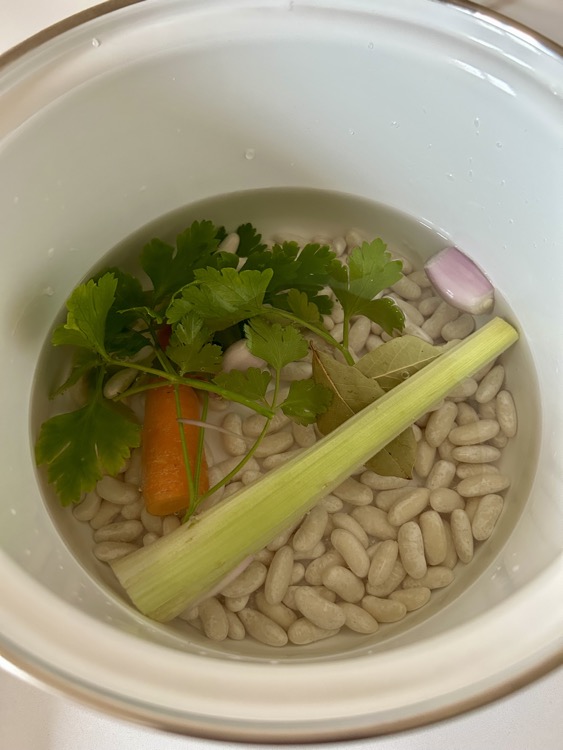
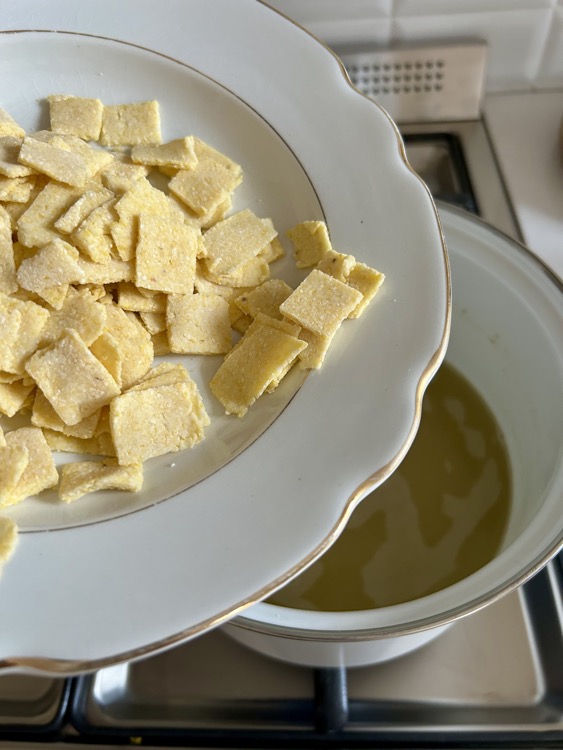
Giugetti pasta in bean broth
Bean broth is another typical preparation for Italy and Romagna’s poor peasant cuisine.
This legume was once known as the poor man’s meat. It is a vegetable source rich in protein in nature and, for this reason, made up for the lack of meat, whose flavor they also resemble.
Going back to the giugetti, the sfoglia is a mix of yellow flour, which was never lacking in the homes of the poorest, and white flour, which was rarer and more precious (although it was not as refined as today’s 00), hot water and a pinch of salt.
Small squares were made from the not-too-thin pasta sheet, which was cooked in a bean broth, which was then the cooking water of the beans themselves, perhaps enriched with an onion or potato.
Some people served the giugetti pasta in the broth after removing some beans and mashing the others to thicken the broth. Others cooked the pasta squares in the broth after removing the beans, which, sautéed in a pan with chopped onion and bacon, became the seasoning for the giugetti pasta.
I know a little meat in a cucina povera dish seems strange. However, remember that in winter, people used to kill pigs. And so, incredibly, there could be some lard or bacon in the seasoning.
Finally, there was also a variant typical of Faenza. Here, in the past, giugetti was cooked in lightly salted milk and then served as a meal for children and older people after a long rest in the liquid.
A final note on this forgotten pasta concerns the origin of the name.
The word comes from the Italianization of a dialect term. And it seems related to bean broth. Giugetti is derived from giugér, which means sbruffare (to squirt a liquid from the mouth or nostrils). Ingiugiarsi, in the Romagnolo dialect, meant to splash giugetti broth on oneself.
Hunger was stronger than good manners at the table of these honest but poor peasants.
Buona cucina, Monica
Other recipes from cucina povera of Emilia-Romagna
Bologna bean and maltagliati soup
Maltagliati pasta with tomato sauce
Passatelli in bean broth
Keep in Touch
- To receive unpublished recipes, tips, and food stories, sign up for the Tortellini&CO newsletter.
- Follow me on Instagram.
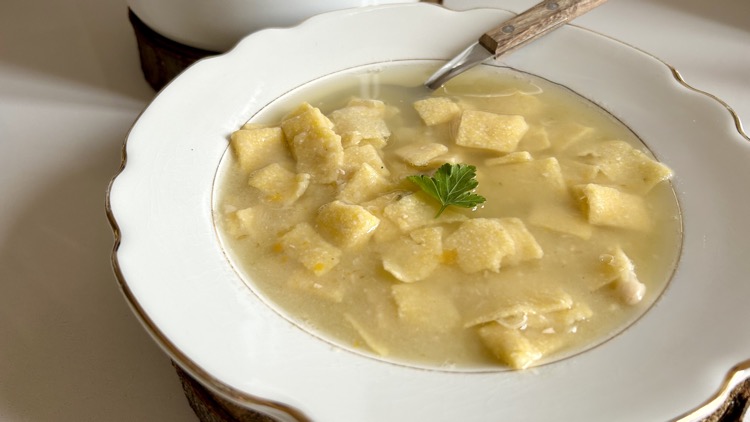
Giugetti pasta in bean broth
Ingredients
Giugetti
- 100 g of 00 or all purpose flour
- 100 g of fine cornmeal flour
- 1 g of salt
- 80-100 g of warm water
Bean broth
- 100 g of dried beans such as cannellini or borlotti beans
- 20 g of celery
- 30 g of carrot
- 20 g of shallot or onion
- 7 g of parsley, leaves and stems
- 100 g of potato without skin
- 2 bay leaves
- 5 g of coarse salt
- 2 liters of water
Instructions
Giugetti dough
- Mix yellow flour, white flour, and salt.
- Place the flour on the cutting board and form a well in the center with your fingers.
- Pour in 1/3 of the water and, using a fork, gradually bring the flour toward the center to mix with the water.
- Start kneading by pouring in the water a little at a time. Work the dough with regular wrist movements, pushing the mixture forward and bringing it back toward you for about 10 minutes until it is smooth and soft but not sticky.
- Form a ball and let the dough rest for 30 minutes at room temperature, wrapped in plastic film or under a glass bowl.
Pasta sheet
- Roll out a thin sheet not thin, about 5mm high, with a pasta machine or on the cutting board.
- Use a pasta cutter wheel to cut out 1cm squares.
- Let stand on a tray for 30 minutes. Then, bake the dough or store it in the freezer.
Bean broth
- Soak the beans in water overnight.
- Drain beans and cook in a pot of unsalted water for 30 minutes.
- Drain, rinse under running water, and set aside.
- Arrange all ingredients, including beans, in a large pot. Cover with water and bring to a boil on medium heat. When the liquid boils, lower the heat and cook for one hour or until the beans are soft.
- Remove the bay leaf and use an immersion blender to cream the vegetables in the broth. First, if you like, remove some of the beans for other uses.
- Taste and adjust the salt if needed.
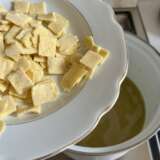
- Bring the broth to a boil, submerge the jujubes, and cook for a few minutes. Serve the pasta in the warm bean broth.


