Stew is a classic recipe from home cooking and Italian tradition.
This dish belongs to the family of braised meat. Usually, for that kind of stew, you can choose a less expensive cut of beef, or lamb, cut into bite-sized pieces, browned in a pot with oil and butter, and then simmered over low heat with the addition of wine and, later, tomato puree and vegetables like potatoes, peas, and carrots.
This cooking requires the meat to be submerged in a liquid. Depending on the family tradition, the stew can be red for the use of the passata di pomodoro or white, if you are using broth.
Winter Dishes and Family Lexicon
It is as if my entire childhood was lived out in the cold months, a decade spent togged up in duffel coats and mittens, wellingtons and woolly hats. To this day, I am never happier than when there is frost on the roof and a fire in the hearth. I have always preferred snow underfoot to sand between my toes.
Like Nigel Slater, I love winter. Looking back on my life, despite the wonder of spring Sunday outings and endless summer vacations, the beauty of winter memories remains wrapped in a special light. Even now, more than ever, I love the season that makes home the coziest place to return to or stay in, depending on the day. I also love the comfort of warm dishes that fill the air with their aromas during cooking, making it as welcoming as a hug.
Stews are dishes that always make me happy.
My family lexicon included our own words and silences full of meaning. There was no need for someone to announce the Sunday dinner menu since we all knew that, especially in the cold season, we would be greeted by the comforting flavor of a stew.
As a child, I wasn’t a big meat eater. I often struggled to finish the steak that I found on my plate once a week or some Sunday roasts like roast beef.
Yet, I found the succulent bites of veal stew irresistible, made tender and flavorful after a long cooking time, often accompanied by potatoes that cooked in the same sauce, absorbing an infinite amount of flavors and becoming so soft that I could mash them with a fork and use them to scoop up the sauce.
A delight that made me hungry and left me happy.
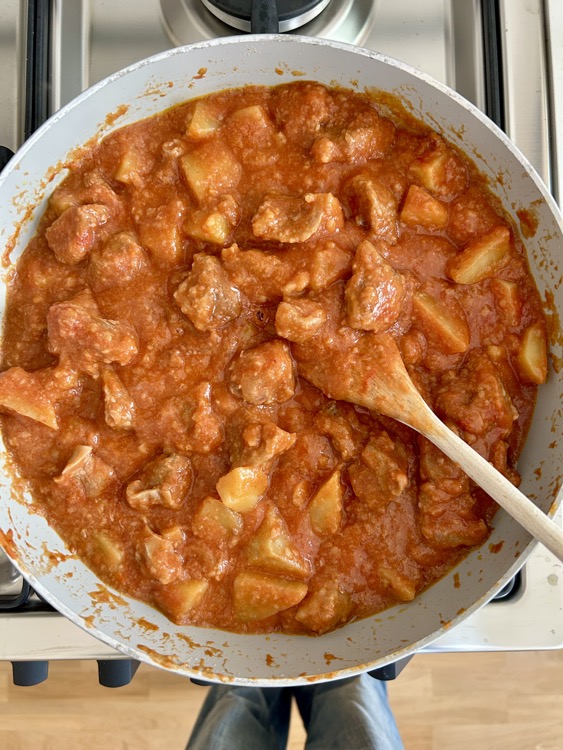
Veal stew with potatoes
The dish is easy to prepare, although a dilemma often plagues those who want to try the recipe: what’s the secret to keeping the meat tender?
Here are three tips.
Choose the proper cut of meat, such as shoulder or brisket, which can withstand long cooking without drying out and becoming tough; cook the stew for a long time; flour the pieces with flour but removing any excess flour that could cause the meat to stick to the pot and burn.
Another interesting question concerns the initial sauté. Some people do it, while others add the meat to the pot without sautéing. Since this is a home recipe, I believe there’s no general rule, only personal habits. If you don’t have a memory to refer to, try it both ways and find your own path. For example, my maternal grandmother didn’t use a sauté. At the same time, my mother-in-law starts with a sauté of carrot, celery, and onion, and her stew is white (without passata).
This recipe considers the two different family traditions, and to please my husband and me, I started with a soffritto and added the tomato sauce. However, if you want to try a white stew, don’t forget to use about ½ liter of meat or vegetable broth.
Finally, remember that this is a dish where love is an ingredient just as much as the time it takes to do things properly.
Buona cucina, Monica
There is also a recipe for no-passata stew on the blog: HERE
Keep in Touch
- To receive unpublished recipes, tips, and food stories, sign up for the Tortellini&CO newsletter.
- Follow me on Instagram.


Veal stew with potatoes
Ingredients
- 500 g of yellow-fleshed potatoes
- 50 g of butter
- 25 g of olive oil
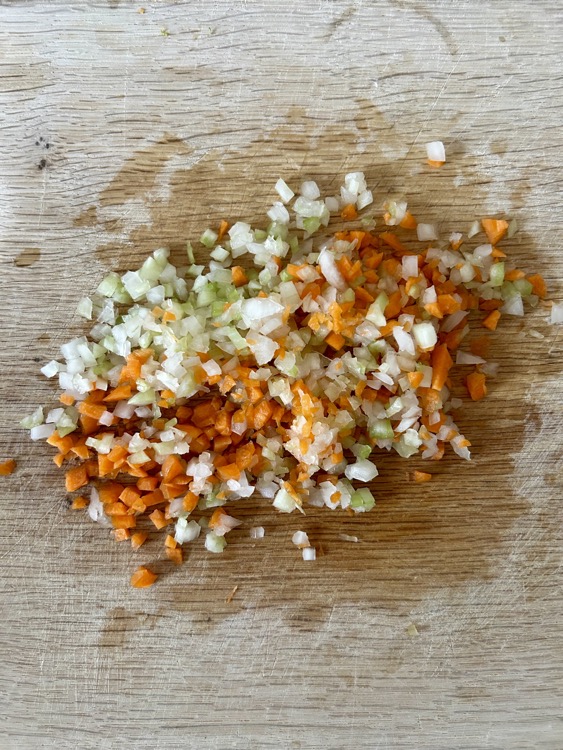
- 30 g of chopped carrot
- 30 g of chopped celery
- 30 g of chopped onion
- salt to taste
- 800 g of shoulder or brisket cut in bites
- salt to taste
- 80 ml of white whine
- 100 ml of meat or vegetable stock
- 100 ml of tomato passata
- salt to taste
- 100 ml of warm water
- 100 ml of tomato passata
- 6 of tomato paste
Instructions
- Peel potatoes, cut into irregular cubes, and set aside.
- Choose a large saucepan, melt the butter in the oil, and pour in the carrot, celery, and onion. Add a pinch of salt to prevent the sauté from burning, and cook over a gentle flame for a few minutes or until the vegetables are translucent.
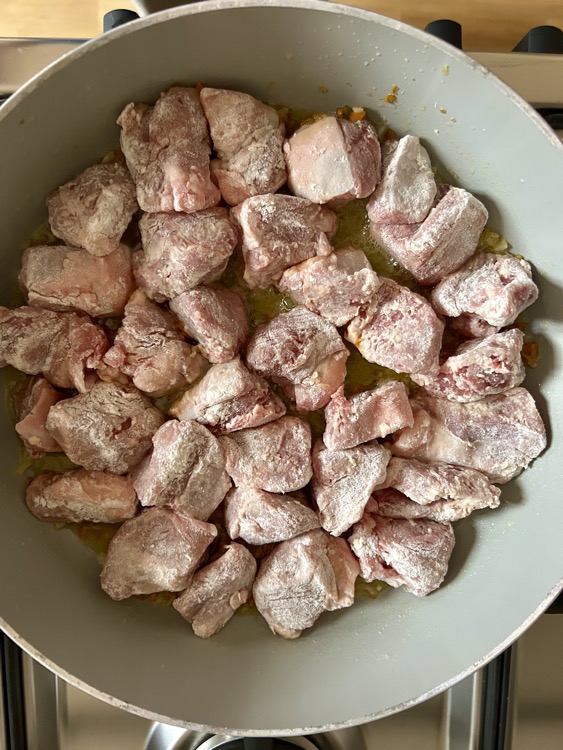
- Meanwhile, put some flour in a dish, flour each meat morsel, and tap lightly to remove excess flour.
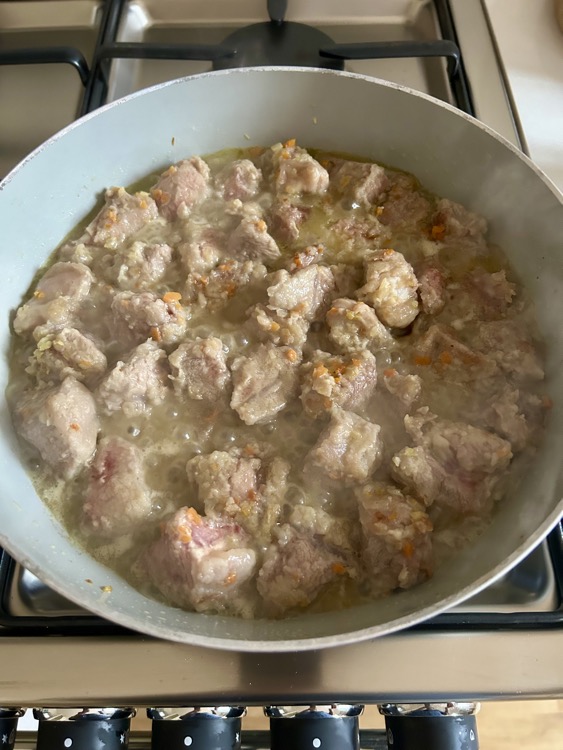
- Arrange the meat bites in the pan so they do not overlap, cook for two minutes on a gentle flame, turn them over, cook for two more minutes, salt, raise the heat, wait a moment, and mix with the wine. Let the alcohol part evaporate over a gentle flame. This step takes only a few minutes.
- Pour in broth and passata and stir. Cook, without stirring, in a half-covered pan on a small stove and low flame for one hour. Stir from time to time.
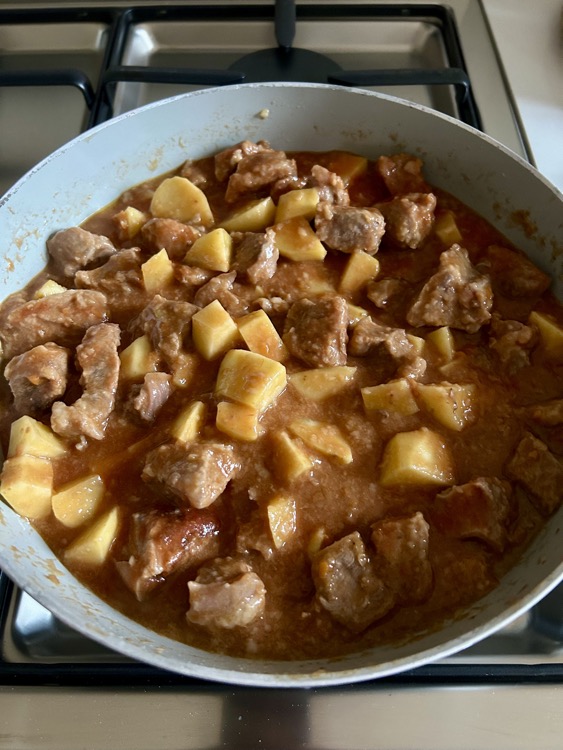
- Meanwhile, dissolve the concentrate in the hot water and set aside. After an hour, add the diced potatoes, water with concentrate, passata, stir, add salt, stir again, and cook for another 30 minutes, or until the potatoes are soft, with the pan covered.
- Turn it off, taste it, and adjust the salt if needed. Serve the stew hot.
Tips
- You can prepare the dish a day or two in advance by storing it in the refrigerator and adding some warm water when you reheat it. In this way, the sauce will return soft.
- You can store the stew in the freezer for up to a month.