
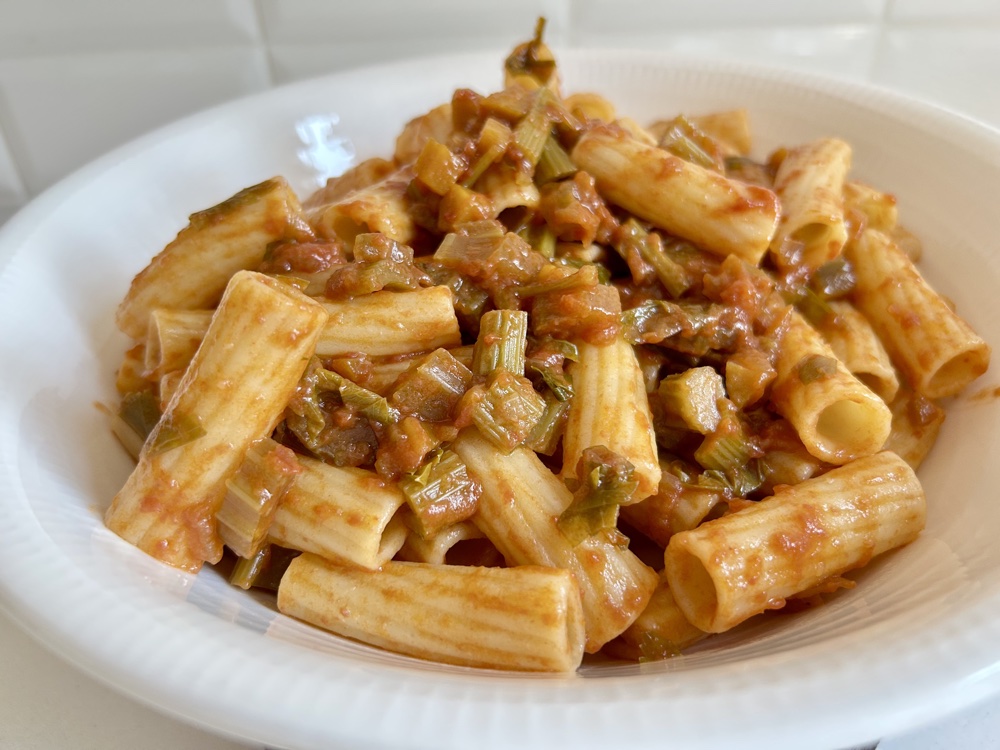
My husband comes into the kitchen exclaiming, “What a wonderful smell of old-fashioned ragù.” And he’s right, because celery ragù, or vegetable ragù, is a forgotten recipe from Romagna that is well worth rediscovering.
The recipe belongs to the peasant repertoire of sughi finti (fake sauces), where the adjective indicated the absence of an ingredient you would expect to find, usually meat. This is also the case with parsley sauce, another peasant recipe from Romagna that I often cook and which I particularly like with long pasta, both fresh and dry, such as tagliatelle and spaghetti. Or like the stridoli sauce that I shared on my Instagram profile and that I almost always pair with long pasta shapes, but then you follow your own way and be happy.
I grew up eating all kinds of sughi finti. I love their flavor from the moment they are just a scent that takes shape in the pot and spreads through the air. And today I am happy to share this humble and yet so modern recipe with you.
Vegetable ragù, celery ragù
The flavor of celery ragù is intense and surprisingly enveloping. It is quick and easy to prepare, but cooking it takes longer than you might expect. It needs to simmer for a while, just like some ragùs, which is why I have chosen to use this term instead of sauce or gravy.
The recipe is naturally vegetarian and vegan, inexpensive, and, if you’re willing to give some credit to this cook who uses words as much as spoons and pans, you’ll be pleasantly surprised.
While this vegetable ragù was slowly cooking, in addition to the tomato sauce, my grandmother would add a generous glass of red wine to give it more body. In this regard, I have introduced a change that you can adopt or use red wine as in my family’s version.
Instead of wine, I used low-salt soy sauce, and for me, not only does it work, but it’s the ingredient you don’t expect that changes the game. If a good red wine gives character to any dish, in the preparation of this celery ragù, the soy sauce goes even further, adding savory notes and fullness of flavor.
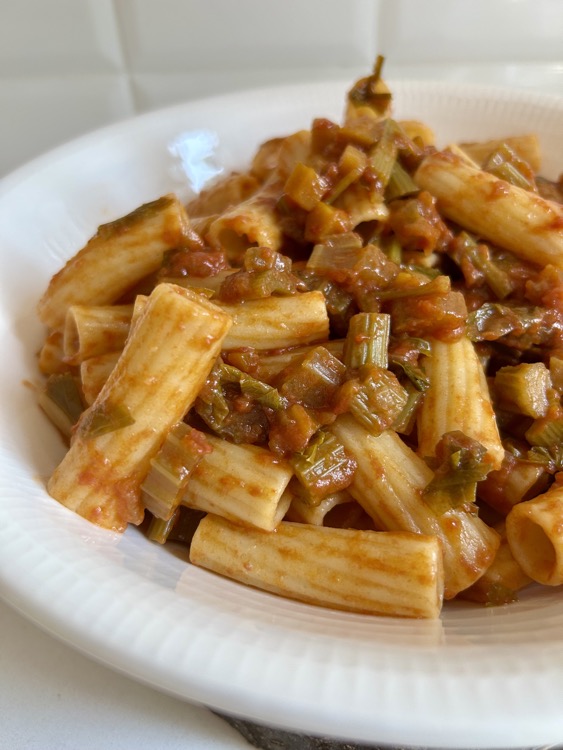
Notes on preparing the celery ragù
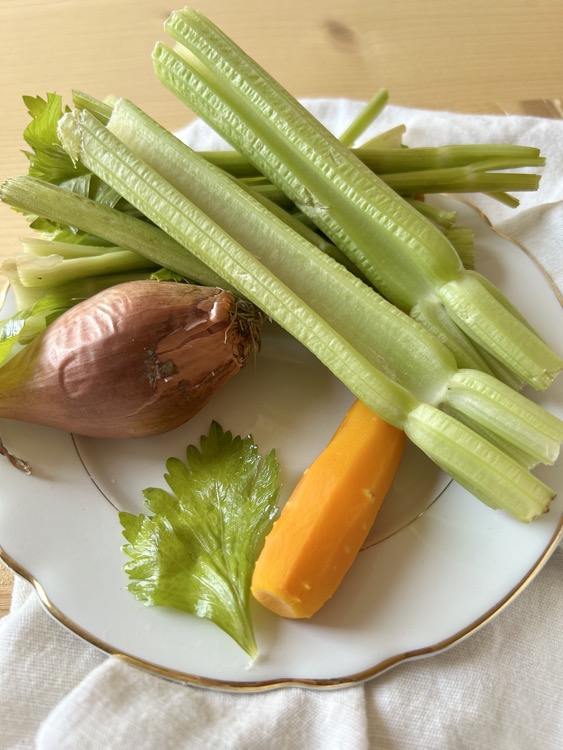
First, prepare all the ingredients on the work surface, already washed and dried. This will allow you to work faster and avoid going back and forth between the sink and the work surface.
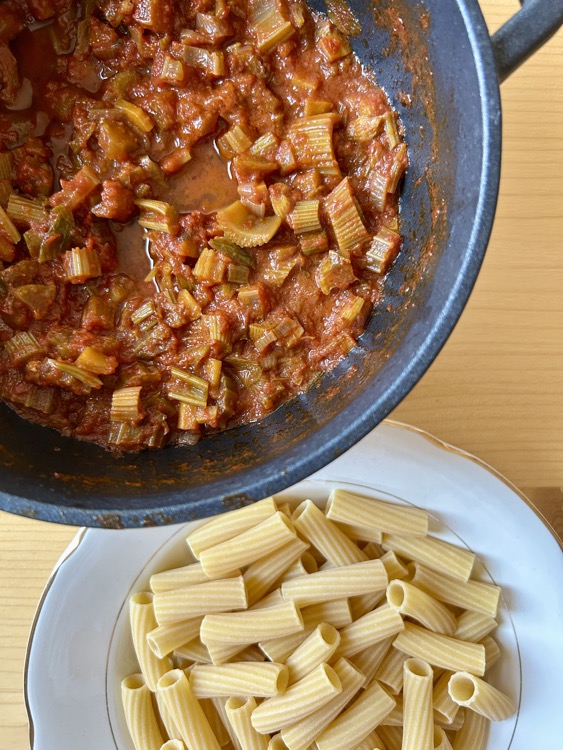
Chop the vegetables separately with a knife on a wooden cutting board, leaving them coarse, as this will give the sauce more texture. Once cooked, it will resemble a meat ragù in appearance and consistency. If you prefer, you can also use a food processor, keeping the vegetables separate.
Finally, since the soffritto is, after all, the recipe itself, don’t give in to the temptation to throw all the vegetables into the pan together.
Cook the carrots, onions, and celery separately (this is why I recommend cutting them without mixing them).
I also sometimes throw all the veggies of the soffritto into the pan at once. Still, in this case, it is better to start with the carrots, which are harder, and then add the more delicate onions. In this recipe, the celery, which I would typically add shortly after the carrots and before the onions, goes in the pan last, leaving the celery pieces larger and also using the leaves, provided that the celery is organically grown and has not been chemically treated.
Celery leaves are rich in nutrients and antioxidants, and have an intense, aromatic flavor. Remember not to add too much salt to the celery ragù while cooking. It is better to add salt at the end (especially if you are using soy sauce instead of red wine).
Cook each vegetable of the soffritto over low heat, stirring, before adding the next one. This will prevent them from browning too much and giving the celery ragù a slightly burnt taste that could compromise your work.
Buona cucina, Monica
From my newsletter, Food Notes from Bologna the recipe for
Three recipes for fake ragù (without meat):
Keep in Touch
- To receive unpublished recipes, tips, and food stories, sign up for the my newsletter, Food Notes from Bologna.
- Follow me on Instagram.
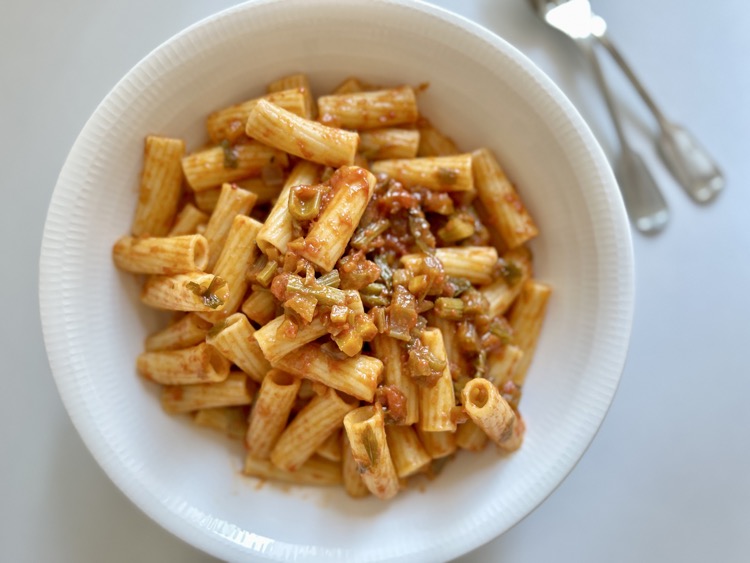

Celery ragù, a vegetable ragù of Romagna
Ingredients
- 40 g of carrots
- 50 g of onions or 2 shallots
- 200 g of celery with leaves
- 20 g of low-salt soy sauce
- 300 g of tomato passata
- 60 g of water at room temperature
- 10 g of tomato paste
- olive oil and salt to taste
Instructions
- Wash the vegetables and, keeping them separate and without removing the celery leaves, chop them coarsely with a knife (except for the onion, which should be chopped more finely).
- Add two generous tablespoons of olive oil to a pan (and 50 g of butter if it is in the refrigerator and the sauce is not for vegans).
- Gently fry the carrots over a low to medium-low heat for about 3 minutes, stirring. Add the onion, stir, and cook for two minutes before adding the celery. Add a pinch of salt and continue cooking, stirring, for 3 minutes.
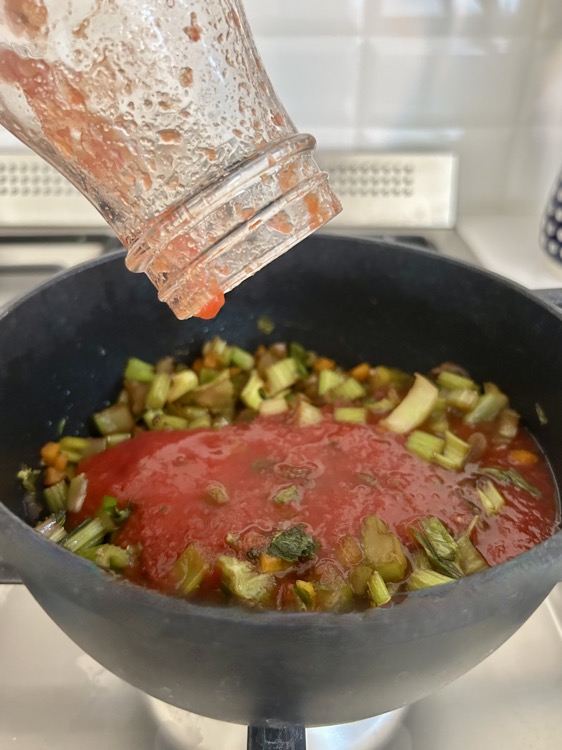
- Now pour the soy sauce into the pot, raise the heat slightly, and let it evaporate for two minutes. Then pour in the tomato sauce and paste, water and stir.
- Cook over low heat on a medium-low flame, stirring occasionally, for 30-40 minutes until the sauce is a beautiful deep red color and smells inviting.


