The Bologna herb pie is one of the many possible recipe versions with peasant origins, widespread throughout Italy. The most famous version in Emilia-Romagna is the erbazzone pie.
This is one of those recipes that, without the need for many words, proves that Italian cuisine exists and is thriving despite its many critics, including famous ones.
In fact, Italian cuisine is not an invention. Like French cuisine, is the sum of many regional kitchens with something extra given by a large group of recipes that, regardless of local variations, identify not only a country or a territory but a larger space that, since 1861 (not before), people have called Italy, giving this name a national identity and not just a sentimental one.
This recipe shares many similarities with the aforementioned Emilia-Romagna one and with other savory pies of this kind. All are characterized by a filling of leafy vegetables and a crust of pasta matta (a simple, rustic dough. Artusi wrote it is called crazy not because it is likely to do something mad, but for the simplicity and ease with which it can serve as the necessary dress for a variety of dishes).
Wild herbs were a typical flavor in soups, pies, and other recipes of peasant cuisine in the past due to the ease of gathering them for free. However, this traditional recipe also made its way to the high tables, just as it did with other dishes. For example, the cappellacci di zucca from Ferrara, which originated in peasant kitchens, eventually reached the Estense court.
However, the history of this herb pie (in Italian, torta d’herbe, has kept the silent “h” in its name), offers an interesting glimpse into the past.
This assertion rests on two different informations. The first is the codification of the recipe, which, instead of being passed down orally (as is usually the case with recipes from cucina povera), we find in the works of several chefs who gained international fame between the end of the Middle Ages and the Renaissance.
The second concerns the presence of butter and sugar in the dough, two ingredients available in the kitchens of wealthy families.
Finally, the combination of sweet and savory recalls a flavor typical of the Renaissance period, as seen, for example, in the recipe for macaroni pie from Ferrara.
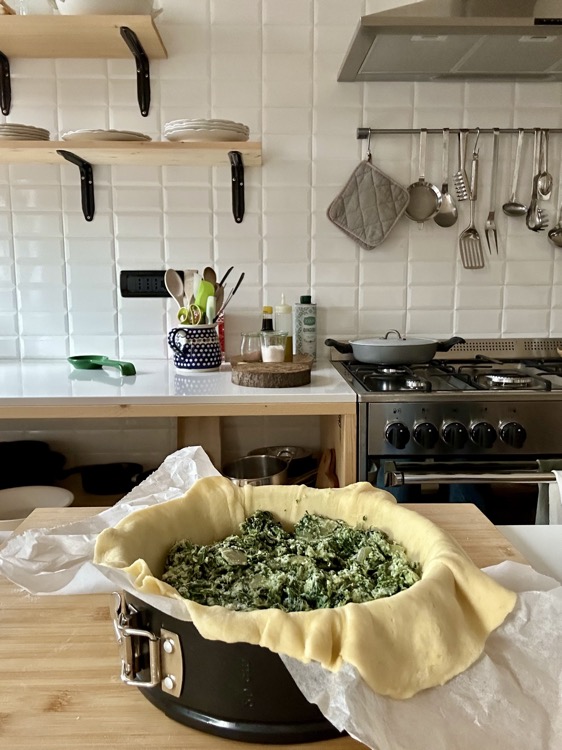
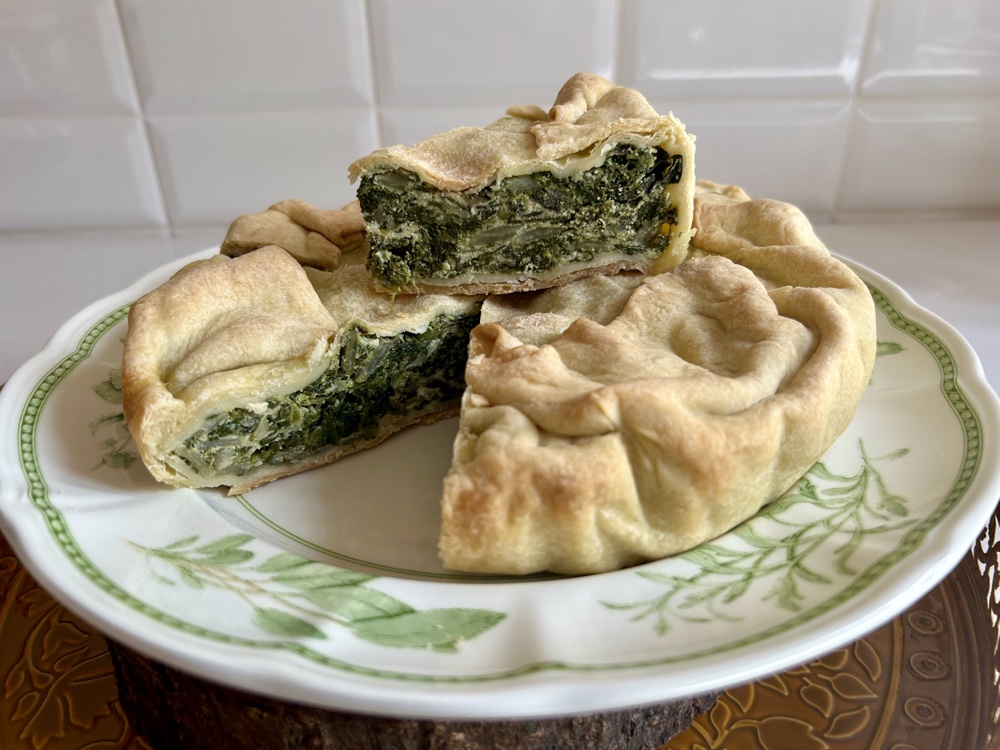
Torta d’herbe or the herb pie of Bologna
The reference to the city of Bologna and the preparation method can be found in ancient texts. Such as the one by Mastro Martino (Libro de cosina, 1450). It is a significant work since the author chose to write in archaic Italian to make it accessible to as many people as possible. This text, with the original preserved today in an American library, also marks the transition from medieval to Renaissance cuisine.
The famous 16th-century chef Bartolomeo Scappi (Opera, 1570) included a recipe “to make torta d’herbe alla Bolognese without eggs.“ This ancient version has been passed down to us with a filling of herbs, ricotta, and Parmigiano. It is framed by a pasta matta enriched with sugar.
Lastly, that recipe also appears in the 17th-century work of Bolognese chef Giuseppe Lamma (Libri di Cucina, the original manuscript is available at the Archiginnasio Library in Bologna). In the book, the author details the recipe “to make torta di herbe alla Bolognese, that is, with large lettuce, borage, or borage stalks.“ The ingredients listed are pasta a vento (a kind of pasta matta), Grana Lodi cheese, salt, pepper, and cinnamon.
Pasta a vento
At least, the pasta a Vento, in use in the 17th century, is part of the large family of pasta matta and is made with flour, egg yolk, a little butter, water, and sugar (which is brushed with butter on the rolled-out dough before folding), making it crumbly and light. If the work involved seems daunting, you can substitute it with a sweet brisé dough to maintain some of the distinctiveness of this savory pie. In that case, I followed the procedure for pasta a vento, which is manageable for anyone who has ever rolled out dough at least once in their life.
You probably already have one or more recipes for herb pie in your cooking repertoire. However, if you want to try the Bolognese version, I’m sure it won’t disappoint.
Buona cucina, Monica
Recipes I mentioned
Keep in Touch
- To receive unpublished recipes, tips, and food stories, sign up for the Tortellini&CO newsletter.
- Follow me on Instagram.

Herb pie of Bologna (Torta d'herbe)
Equipment
- hinged pie mold, 22 cm diameter
Ingredients
Filling
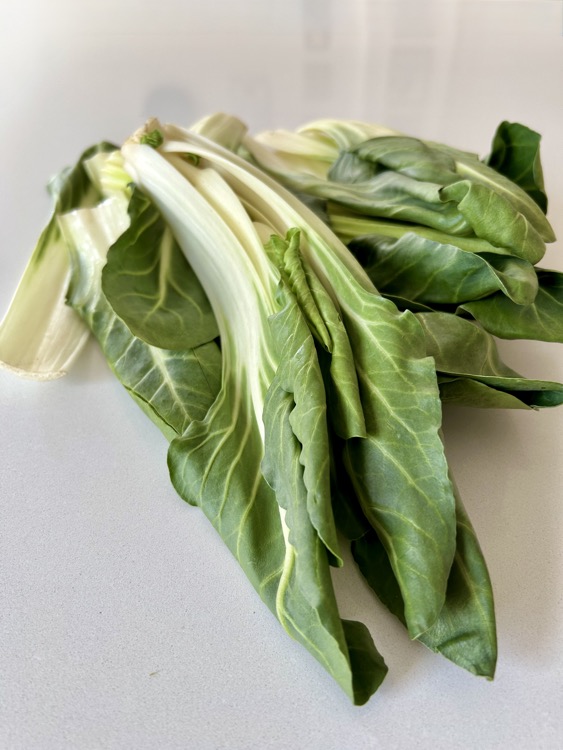
- 300 g of fresh chard
- 250 g of fresh spinach
- 3 tablespoons of olive oil
- 70 g of grated Parmesan cheese
- 150 g of cow's ricotta cheese
- 2 regular eggs
- salt and pepper to taste
Dough
- 250 g of 00 flour
- 2 g of fine salt
- 40 g of butter softened out of the refrigerator
- 1 yolk
- 100 ml of cold water
- 30 g of butter that ingredient is for spreading the dough sheet
- 15 of granulated sugar that ingredient is for spreading the dough sheet
Instructions
Filling
- Wash and cook spinach and Swiss chard in boiling unsalted water. Drain and place in a bowl of cold water for about ten minutes. Then, squeeze out the excess water and chop the greens finely with a knife.
- Place the greens in a pan, season with olive oil and salt, and cook on low heat for about 10 minutes, stirring occasionally. Let them cool.
- Crack the eggs into a large bowl, add a pinch of salt and olive oil, and lightly beat them with a fork before adding the other ingredients.
- Mash the greens and ricotta with a fork and mix, using your hands or a metal spoon, until well combined. Set aside in the fridge until ready to use.
Dough
- You can prepare the dough with a stand mixer by adding all the ingredients to the bowl and kneading with a dough hook. Alternatively, you can knead by hand (instructions below).
- Pour the flour onto a work surface, create a well in the center, sprinkle salt around the edges of the well, and place the soft butter cut into chunks, the egg yolk, and a little water in the center.
- Break the egg yolk with a fork and mix it with the water. Gradually bring some of the flour from the edges into the center and start kneading with your hands, adding water little by little and incorporating all the flour until you obtain a soft, not sticky dough. Add one tablespoon of water at a time if the dough feels too dry.
- Let the dough rest on the work surface. Melt the butter and sugar in a small saucepan over low heat.
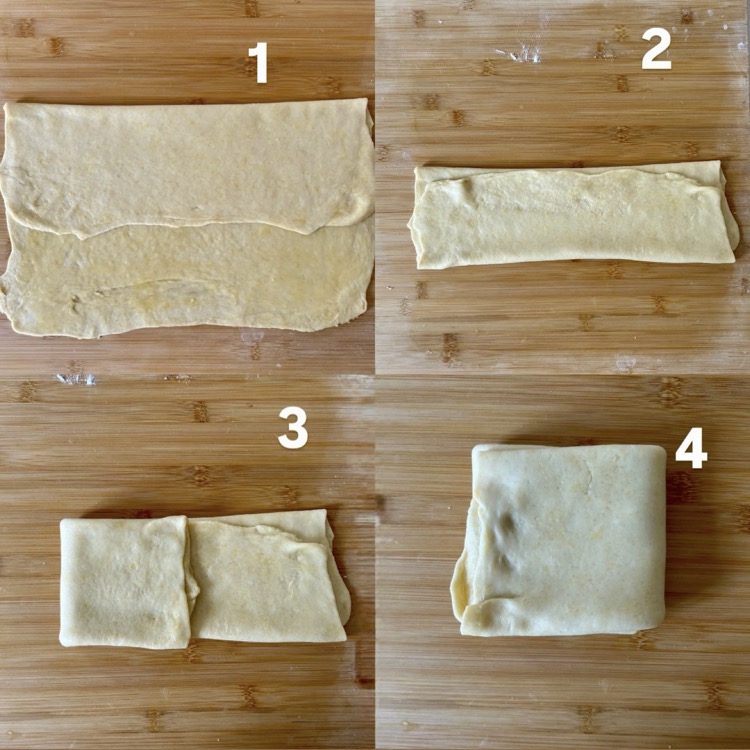
- While the sugar mixture is cooling, roll out the dough into a large, thin sheet about 3-4 mm thick. Brush the dough with half of the melted butter and sugar mixture, then fold the dough 4 times: see the photo below the recipe.
- Roll out the dough again with a rolling pin and brush it again with the butter and sugar mixture. Fold it into a packet like before, and work the dough with your hands for a few minutes, forming a ball.
- Wrap the dough in plastic wrap and let it rest in the fridge for an hour.
Herb pie assembling
- Preheat the oven to 180°C (350°F).
- Set aside 1/3 of the dough and roll the largest part into a thin sheet.
- Grease a springform pan, line it with the dough, and fill it with the prepared filling without pressing it down. Roll out the remaining dough and cover the top of the pie, forming some decorative folding.
- Bake in the oven for 40-45 minutes or until the edges and surface are lightly golden. Remove from the oven and let it cool slightly or completely before serving.
Tips
- If you use frozen vegetables, the total weight you need is 400 g.
- Store any leftovers in the refrigerator for a few days.